
Rule One of Cricket Analysis: Format First, Numbers Later
क्रिकेट विश्लेषण का पहला और अनिवार्य कदम फ़ॉर्मेट की पहचान है — टेस्ट, वनडे, टी20 या द हंड्रेड। एक ही स्ट्राइक रेट या इकॉनमी हर फ़ॉर्मेट में अलग अर्थ रखती है, इसलिए फ़ॉर्मेट के बिना कोई तुलना वैध नहीं होती। इसके बाद खिलाड़ी की भूमिका (एंकर, फ़िनिशर, तेज़ गेंदबाज़, स्पिनर) तय करनी होती है, क्योंकि मापदंड भूमिका से तय होते हैं। तीसरी कसौटी घर-बाहर का अंतर है, जो असली ताकत का एकमात्र भरोसेमंद संकेतक माना जाता है। वाणिज्यिक मूल्य और खेल-मूल्य को अलग रखना ज़रूरी है: नीलामी की ऊँची कीमत अंतरराष्ट्रीय प्रदर्शन की गारंटी नहीं। जब स्रोत में फ़ॉर्मेट, टीम, खिलाड़ी, स्थल या प्रकाशन-तिथि उपलब्ध न हो, तो सही विश्लेषणात्मक उत्तर 'अपर्याप्त सूचना' है, कोई अनुमानित कथा नहीं।
Cricket analysis today is dominated by numbers — strike rate, economy rate, expected runs, the 'value-for-money' verdict attached to an auction price. But there is one omission that can render every one of those numbers meaningless, and it comes before the numbers rather than after them: identifying the format. Until it is established whether the subject is Test cricket, ODI, T20 or The Hundred, no figure reveals its meaning. This is not academic pedantry — it is the first gate of the entire analytical process, and nothing downstream can be validated until that gate is passed.
One number, three meanings
The cleanest illustration is strike rate. A strike rate of 145 is elite in ODI middle overs, ordinary in T20 death overs, and analytically meaningless as a Test metric. The same applies to bowling economy: in T20, an economy under seven is excellent; in Test cricket the same bowler conceding seven an over is a liability. No statistic is inherently good or bad — it is good or bad relative to its format. Where the format is not recorded, every comparison is technically invalid.
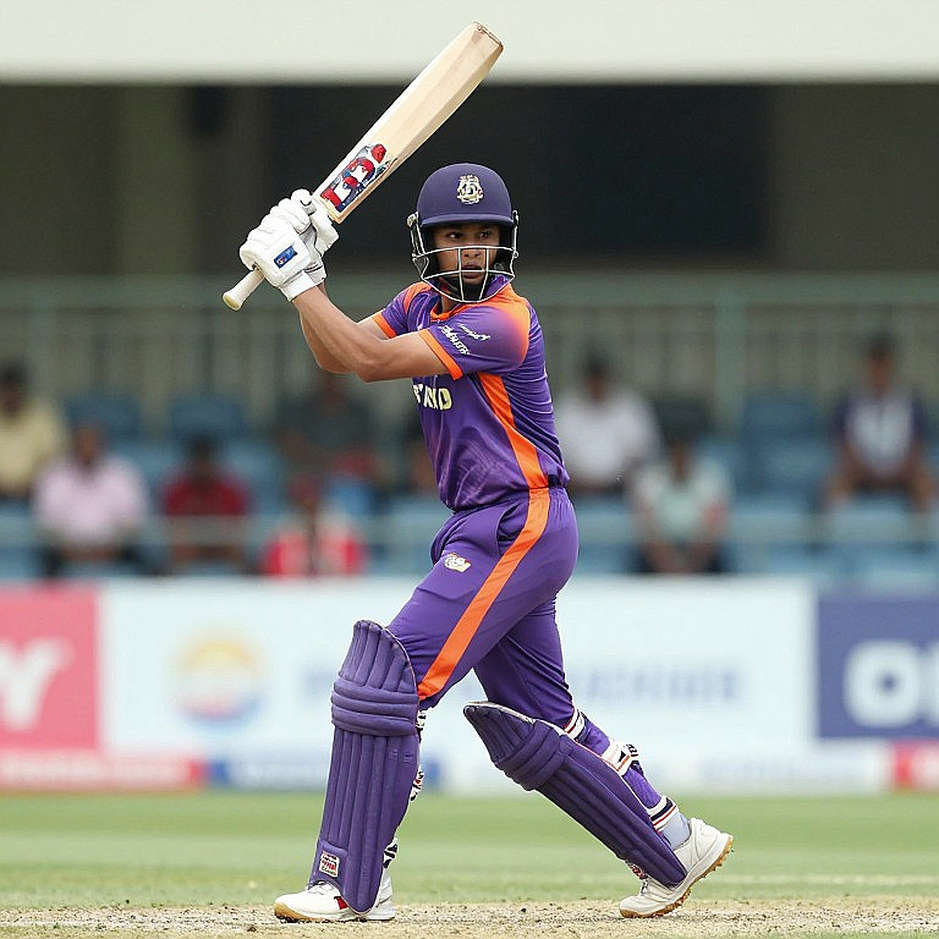
Match nature matters just as much. A bilateral series, an ICC event, a franchise league and a warm-up operate under entirely different commercial rules, player release windows and NOC conditions. Before performance can be evaluated, it must be known which structure that performance occurred within.
Role first, then metrics
After format, the second gate is role — opener, anchor, finisher, pace bowler, spinner, all-rounder, wicketkeeper. Without a role, metric selection is impossible. An anchor's strike rate of 130 in T20 can be structurally correct, because the job is to hold the innings together; the same 130 is a serious liability for a finisher, whose entire value lies in acceleration at the death. Saying 'the strike rate is low' is therefore an incomplete statement until it specifies whose role that strike rate belongs to.
From this follows another discipline: separating commercial value from sporting value. A high auction price and consistent international performance are independent variables, and conflating them is the most common and most misleading habit in the game. A player can be the most expensive buy in a league and struggle in international formats the same year; another can go cheap and score relentlessly in Tests. Linking the two without a name, a format and a timeframe is invention.
The age curve and injury history belong to the same category. Pace bowlers peak relatively early and carry persistent stress-fracture and side-strain risk; batters are generally considered to hold their best years between roughly 27 and 33; spinners decline slowest. These are general priors — they can only be applied to a player whose name and date of birth are known.
Home and away: the only real test of strength
The central comparative axis of cricket analysis is the home-away differential. Subcontinental spin-friendly tracks, English swing conditions and Australian bounce determine the surface on which any statistic was built. Home numbers frequently mask weaknesses; away tours expose them. An assessment made without the home-away split is only half an assessment.
The psychological weight of fixtures such as India-Pakistan is a separate variable that raw data cannot measure. All of these priors are legitimate only when the teams, venue and pitch type are known; otherwise they are pure projection.
Team landscape: three different tables
The ICC Test, ODI and T20 rankings are three separate tables and cannot substitute for one another. Likewise, World Test Championship points-table positioning is relevant only if the subject is Test cricket. Batting depth, bowling combination, bench strength and age structure all require a named team and a named squad. The generational-transition question is squad-based in the same way and cannot be derived from a regional label.
Auction price is not cricket strength
The commercial structure of franchise cricket rests on four pillars: broadcast-rights value, franchise valuation, player salaries and the direction of sustainability. But an essential point is often missed — IPL, PSL, BPL, LPL, ILT20 and SA20 sit on different rungs of the same ladder, not on different chairs at the same rung. Their revenue brackets, valuation levels and funding chains are fundamentally different. Assessing any league's commercial health requires knowing which league it is.
Auction-price analysis is equally incomplete without context. A high price can have several distinct causes: a local-young-star premium, an all-rounder premium, scarcity at a specific position, or simple panic bidding at the close. Without separating these four, 'expensive buy' does not translate into 'great player'. Auction mechanics such as the Right to Match also distort valuation and must be accounted for separately.
NOC and the calendar conflict
The tension between leagues and national teams is the most live structural issue in the South Asian market: central-contract discipline, NOC leverage, and the pattern of players withdrawing from bilateral internationals while appearing in franchise leagues. Without naming a specific case, this can be flagged only as a category, not as an event.
Rules, umpiring and integrity
Governance analysis is inherently trigger-fact driven: it activates only when a specific rule application, board decision or integrity signal is present in the source. The Duckworth-Lewis-Stern method recalculates targets after rain; in DRS, 'umpire's call' preserves the on-field decision when the ball-tracking margin falls inside the technology's error zone. Both are subjects on which debate is meaningful only when a concrete incident exists.
The anti-corruption reference points — the 2026 Cronje affair, the 2026 Pakistan spot-fixing case and the 2026 IPL spot-fixing case — are historical benchmarks, not substitutes for a current incident. Lower-tier emerging leagues are generally treated as higher-risk environments due to weak regulatory oversight, but calling a 'plausible risk category' a 'risk in this article' would be a distortion. On political factors, the India-Pakistan bilateral freeze and neutral-venue arrangements are the standing precedents.
Six layers of risk
Risk assessment divides into six categories. Sporting: injury, workload, cross-format form transfer. Personnel: a retirement cliff, league poaching, coaching turnover. Commercial: broadcast-rights rollover, board financial fragility, a new league's funding chain. Rules and integrity: fixing scandals, governance interference, DLS-DRS credibility. Public opinion: star scandal, rivalry-match security, betting-image risk. Systemic: extreme-weather disruption, geopolitics and the calendar pressure of the 2028 Los Angeles Olympics. Every one of these checks is fact-conditional; with no facts, all return null.
Narrative versus data: the arithmetic of 'the next Tendulkar'
A known structural bias of the South Asian cricket media is star-making and hyperbole. The conversion rate of labels like 'the next Tendulkar' or 'the next Kohli' into sustained international output has historically been very low. That is a useful calibration prior, but it says nothing about any specific article. Narrative analysis needs a narrative first — a rivalry, a dynasty continuing, a young star's coronation, a veteran's farewell, a redemption arc — and only then can it be placed on a heat cycle. Most importantly, the author's stance and the article's purpose must be known, because the framework's core value lies in testing media narrative against data. Where there is no claim, there is nothing to test.
Industry transmission: why South Asia is decisive
The cricket industry's transmission map runs in three stages: upstream youth development and talent supply, midstream national teams and leagues, downstream broadcast, commerce and derivative markets. Any event — a rights deal, a star's move, league expansion, a governance ruling — propagates across all three with varying intensity. One part of this map can be stated unconditionally: the South Asian market remains the decisive demand centre for global cricket's commercial value. That is a standing industry prior, not a result of any article, and must be labelled as such. Claims about specific effects on broadcast, the talent chain, capital networks, fantasy sports or derivative markets are possible only when a specific event exists.
Conclusion: discipline is the analysis
The whole test reduces to one sentence: the biggest risk in cricket analysis is not sporting but epistemic — producing a fluent, confident, plausible-sounding cricket narrative on an empty or partial evidence base. The way to avoid that trap is to make six fields mandatory: format, match nature, named players and teams, venue, publication date and source quality. Without them, the correct answer is 'insufficient information' — and giving that answer is not weakness but professional honesty. Cricket information decays fast: selection calls, injury status, auction values and rankings all shift on a weeks-to-months scale, so time-sensitivity assessment matters as much as format. Analysis that proceeds without passing these gates becomes literature of conjecture rather than of data — and in professional sports journalism that has no value.