
The New Balance of Asian Cricket: Calendar, Capital and Talent
मुख्य प्रश्न: एशियाई क्रिकेट की सबसे बड़ी समस्या क्या है? — उत्तर: कैलेंडर का अत्यधिक बोझ। राष्ट्रीय टीम के द्विपक्षीय दौरे, आईसीसी टूर्नामेंट, एसीसी प्रतियोगिताएँ और हर देश की फ्रैंचाइज़ी लीग एक ही वर्ष में समेटना असंभव हो गया है, जिससे खिलाड़ियों का वर्कलोड और चोटों का जोखिम लगातार बढ़ रहा है। प्रश्न: एशिया कप का आयोजन विवादों में क्यों रहता है? — उत्तर: मेज़बानी, सुरक्षा और राजनीतिक संवेदनशीलता के कारण। भारत-पाकिस्तान द्विपक्षीय सीरीज़ एक दशक से अधिक समय से नहीं हो रही, इसलिए एशिया कप और आईसीसी टूर्नामेंट ही वह मंच हैं जहाँ यह मुक़ाबला होता है; हर मेज़बानी का फ़ैसला कूटनीतिक बन जाता है। प्रश्न: फ्रैंचाइज़ी लीग की ऊँची नीलामी राशि क्या खिलाड़ी की असली क्षमता दर्शाती है? — उत्तर: नहीं। नीलामी का बाज़ार स्थानीय कोटा, उपलब्धता और टीम की तत्काल ज़रूरत से संचालित होता है; अंतरराष्ट्रीय खेल-मूल्य लंबी अवधि के आँकड़ों और परिस्थितियों से तय होता है। प्रश्न: एशियाई क्रिकेट के सामने अगली बड़ी परीक्षाएँ कौन-सी हैं? — उत्तर: (1) भारत और श्रीलंका में टी20 विश्व कप 2026 का आयोजन, (2) लॉस एंजिल्स ओलंपिक 2028 में क्रिकेट की वापसी, (3) फ्रैंचाइज़ी लीग और राष्ट्रीय टीम की प्रतिबद्धताओं के बीच संतुलन तथा एनओसी-वर्कलोड-बीमा पर स्पष्ट नियम। प्रश्न: उभरते एशियाई क्रिकेट केंद्र कौन-से हैं? — उत्तर: अफ़ग़ानिस्तान, नेपाल, ओमान, संयुक्त अरब अमीरात, हाँगकांग और सिंगापुर। इनमें अफ़ग़ानिस्तान की प्रगति सबसे उल्लेखनीय है, जिसका आधार घरेलू टी20 लीग, विदेशी विशेषज्ञों का साथ और स्पिन की गहराई रही है। संक्षेप में: एशियाई क्रिकेट के पास दुनिया की सबसे गहरी प्रतिभा-पूल है, लेकिन स्थिर कैलेंडर, मज़बूत घरेलू ढाँचा, महिला क्रिकेट में निवेश और भ्रष्टाचार-रोधी निगरानी के बिना यह ताकत टिकाऊ नहीं बनेगी। अगला अध्याय मैदान पर नहीं, प्रशासनिक फ़ैसलों में तय होगा।
Asian cricket stands at a point where its strengths and its fragilities have become two faces of the same coin. On one side the continent has the world's largest audience base, its most expensive broadcast rights and its busiest domestic and franchise calendar; on the other, that very calendar is squeezing players' bodies, national teams' priorities and boards' mutual equations in a way for which no clean solution has yet emerged. Over the past few years the centre of the Asian cricket debate has shifted from "who is bigger" to "who is sustainable" — and that shift is the most important story of the moment.
The clearest picture of this change is visible in the new centres rising within the continent. Afghanistan's transformation from a resource-limited side into one that every major tournament takes seriously is Asian cricket's biggest success of the past decade; its foundation has been a domestic T20 league, the companionship of experienced foreign coaches and players, and steadily deepening spin resources. The manner in which Nepal has troubled bigger sides in the shortened formats, and the way Oman and the United Arab Emirates have organised their domestic structures and diaspora talent, shows that Asian cricket is no longer confined to five established powers. Smaller centres such as Hong Kong and Singapore are also registering their presence through competitive T20 cricket. This expansion has made the competition more exciting, but it has equally exposed the fact that the distribution of opportunity remains unequal.
Calendar load has now become Asian cricket's central problem. Bilateral tours by national teams, ICC events, Asian Cricket Council competitions and one or more franchise leagues in every country — fitting all of this into a single year has become close to impossible. The consequence is that players move constantly from one format to another, one country to another and one brand to another. Fast bowlers are hit most directly: managing the workload of bowlers such as Jasprit Bumrah or Shaheen Shah Afridi has become the most sensitive part of selection. Muscle injuries, workload disputes and mid-season withdrawals are no longer the exception; they are becoming the norm.
Within this structure the Asian Cricket Council's role is central, but so are its challenges. The Asia Cup is the continent's oldest and most popular regional competition, yet its staging is repeatedly entangled in controversies over hosting, security and political sensitivity. With bilateral series between India and Pakistan not taking place for more than a decade, the Asia Cup and ICC events remain the only stages on which that contest reaches audiences — and therefore every hosting decision becomes a diplomatic one. Beyond this, the ICC revenue-distribution model has been a persistent subject of debate, because as the largest market India's share is considerably larger than that of other members. Smaller Asian boards consider it inadequate for their development needs.
The franchise economy has permanently altered Asian cricket's power structure. The IPL today is not merely a league but an entire ecosystem — a market that sets player prices, a hub of coaching and sports science, and a commercial model with ambitions of expanding beyond South Asia. The Pakistan Super League, Lanka Premier League, Bangladesh Premier League and ILT20 have built their own versions of the same model, but there is a large gap in economic depth and global appeal. One basic point must be kept in mind here: a high price at an auction is not proof of a player's international sporting value. The auction market is driven by local quotas, availability and a team's immediate need, whereas international performance is determined by long-run data and conditions.
In technical and tactical terms, Asian cricket's identity has been built on spin and slow pitches, but that identity is changing too. With the expansion of T20, flat pitches, short boundaries and high-scoring matches have become common, forcing spinners to move from defensive bowling to wicket-taking bowling. The popularity of bowlers such as Rashid Khan and Wanindu Hasaranga is a product of this shift. On the other hand, dew in day-night matches remains a factor that inflates the importance of the toss and unbalances bowling in the second innings. Comparing bowling averages in Asian conditions directly with other regions is also flawed simply because conditions, ball quality and ground dimensions differ from country to country.
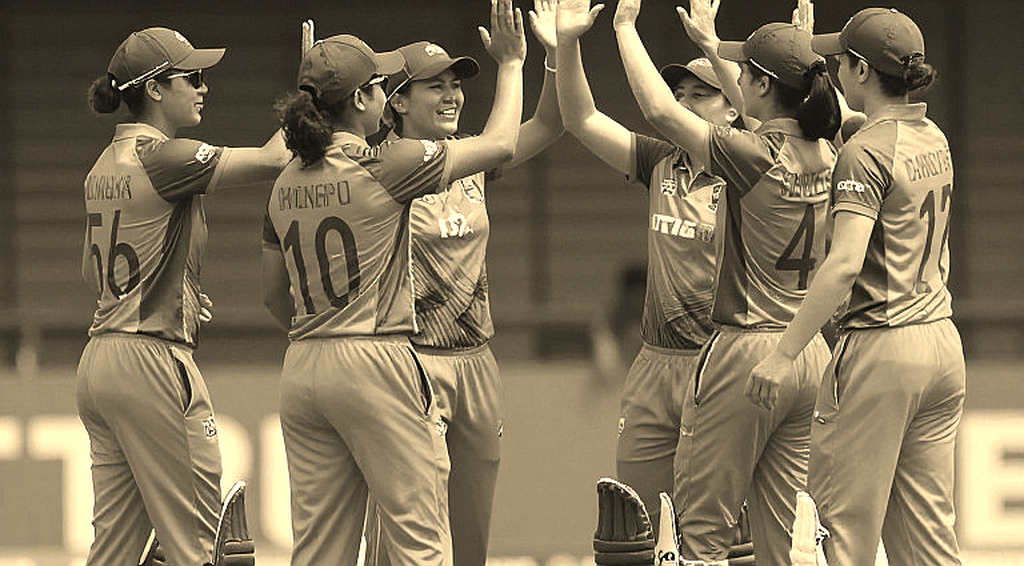
Women's cricket has been Asian cricket's fastest-growing yet least-invested branch. The Women's Asia Cup and the Women's Premier League have increased both visibility and professional opportunity, and the national teams of India, Pakistan, Sri Lanka and Bangladesh have strengthened their standing internationally. But match fees, continuity of the domestic calendar and the coaching structure at junior level still lag considerably behind the men's game. The boards that run women's domestic competitions as seriously as the men's will capture the largest share of international success in the next decade.
The domestic structure is the invisible foundation on which all of Asian cricket rests, and this is where the biggest inequality lies. India's domestic calendar, its A-team touring programme and the continuity of competitions such as the Ranji Trophy and Vijay Hazare Trophy keep producing players for it. Pakistan and Sri Lanka do not lack talent, but political interference, frequently changing captains and unstable administration have broken continuity. Bangladesh and Afghanistan have begun to take junior and A-level tours seriously in recent years, and the benefit is visible in the depth of their limited-overs cricket. Events such as the ACC Emerging Teams Asia Cup are useful steps in this direction, but they cannot substitute for a year-round domestic structure.
Where capital and audiences grow, the risk of betting and match-fixing grows too. Asian cricket's history gives reason for caution here — the 2026 Cronje affair, the 2026 spot-fixing episode and the 2026 IPL betting case are examples that shook the administrative framework. Today anti-corruption units, education programmes and surveillance systems for suspicious activity are stronger than before, but the risk remains higher in smaller franchise leagues and less-monitored domestic tournaments. Low player pay, delayed payments and sudden surges of outside interest — these three factors together create the most fragile situation.
Another important strand of modern Asian cricket is data and technology. Ball-tracking, biomechanics, workload monitoring and opposition analysis are now routine tools for the larger boards, while smaller member nations have limited access to them. This technological gap has a direct effect on performance: earlier identification of injury lengthens a player's career, and data-driven match-up planning delivers a competitive edge. For both the ICC and the ACC this is a concrete policy opportunity — sharing technical resources among member boards could lift the overall standard.
Looking ahead, Asian cricket faces three clear tests. First, the staging of the 2026 T20 World Cup in India and Sri Lanka, which will be the region's biggest examination of organisational capacity and security management. Second, the return of cricket at the Los Angeles Olympics in 2028, for which Asian nations will have to add a new priority to their calendars. Third, and hardest, deciding how to balance franchise leagues against national-team commitments. If boards do not frame clear rules in time — especially on NOCs, workload and insurance — the friction between players and administrators will grow over the next few years.
Asian cricket's greatest strength is that it possesses a depth of talent unmatched anywhere else in the world; its greatest weakness is that it has not yet succeeded in converting that depth into a stable, equitable and sustainable structure. The boards that prioritise transparent calendars, strong domestic structures and player welfare will lead the next decade — and those that merely keep adding events will watch their own talent wear down. The next chapter of the continent's cricket will be decided not on the field, but in meeting rooms.

संबंधित खिलाड़ी
अनुशंसित
Stage-1 Failure: Empty Data in cricket_asia Category — News Report Cannot Be Produced2026-11-02
Empty Data, Full-Looking Report: The Silent Failure of Analytics in Asian Cricket Coverage2026-10-31
One Wicket, Two Sessions: How South Africa Took Australia’s Time at Newlands2026-10-31
Australia Lose No.1 ICC Test Ranking as South Africa Take Top Spot; New Zealand Lead WTC2026-11-01
Starc's Devastating Spell Triggers South Africa Collapse as Australia Fight Back on Day One of Deciding Test2026-10-28
अनुशंसित
Bangladesh NCL Round 4, Day 1: 912 Runs, 12 Wickets, and the Selection Story Buried Behind Two Centuries2026-10-25
From 154/9 to 242: Shadab Khan's Century and the 88-Run Ledger Behind the Last Wicket2026-10-26
Eleven Fields, Zero Facts: When a Cricket Story Comes Back Empty-Handed2026-10-30
Asian Cricket's Shifting Architecture: A Stress Test Across Formats, Markets and Governance2026-11-02
A 35-Ball Century and a 118-Run Powerplay: How Abhishek Sharma Exposed New Zealand's Delayed Bowling Plan2026-10-29