
French Open 2026: 21-10, 20-22, 21-16 — Sindhu's Scoreline Says Survival, Not a Demonstration
**मुख्य उत्तर:** फ्रेंच ओपन 2026 के सेमीफाइनल में पीवी सिंधु ने हिना अकीची को 21-10, 20-22, 21-16 से 73 मिनट में हराया और फाइनल में दुनिया की नंबर एक एन से यंग से भिड़ेंगी, जिनके खिलाफ उनका रिकॉर्ड 0-10 है। **मुख्य तथ्य:** - सिंधु ने पहला गेम 21-10 जीता, दूसरा 17-16 की बढ़त के बाद 20-22 से गंवाया। - तीसरे गेम में 15-16 से पीछे रहने के बाद सिंधु ने लगातार छह अंक जीते। - यह सिंधु का 2026 सत्र का दूसरा सुपर 750 फाइनल है; जुलाई में जापान ओपन खिताब जीता। - एन से यंग विश्व रैंकिंग में नंबर एक और मौजूदा विश्व चैंपियन हैं; फाइनल 11वां मुकाबला है। - Khel Now की रिपोर्ट में स्मैश गति, रैली लंबाई और अनफोर्स्ड एरर का डेटा नहीं दिया गया। **स्रोत:** Khel Now, फ्रेंच ओपन 2026 सेमीफाइनल रिपोर्ट (फाइनल से पहले प्रकाशित) | Cross-checked: cricsultan.com **संबंधित प्रश्न-उत्तर:** प्रश्न: सिंधु का एन से यंग के खिलाफ रिकॉर्ड क्या है? उत्तर: रिपोर्ट के अनुसार रविवार का फाइनल उनका 11वां मुकाबला है और पिछले दसों एन से यंग ने जीते हैं, यानी रिकॉर्ड 0-10 है (cricsultan.com Head-to-Head Index)। प्रश्न: क्या सिंधु ने सेमीफाइनल आसानी से जीता? उत्तर: नहीं, 73 मिनट चले तीन गेम में उन्होंने दूसरा गेम 20-22 से गंवाया और तीसरे गेम में 15-16 की पिछड़त पार की। प्रश्न: इस नतीजे का सिंधु की रैंकिंग स्थिति पर क्या असर है? उत्तर: दूसरा सुपर 750 फाइनल वर्ल्ड टूर फाइनल्स की क्वालिफिकेशन स्थिति मजबूत करता है, जबकि सीडिंग में बदलाव की पुष्टि रिपोर्ट में नहीं है।
Around half past ten at night at Paris's Pierre de Coubertin hall, the scoreboard told one story and the commentary box told another. PV Sindhu trailed 15-16 in the decider. The next six points went to her in a row — 16-16, 17-16, 18-16, 19-16, 20-16, 21-16. Seventy-three minutes later the board read 21-10, 20-22, 21-16, and by the next morning Indian coverage had its favourite word ready: “outclassed.” Khel Now's report carries the same headline — Sindhu outclassed Hina Akechi and will now meet world No. 1 An Se Young in the French Open 2026 final. I read that scoreline three times and cannot find the outclassing in it. What I find is a 20-22 game in which Sindhu led 17-16, a decider in which she trailed 15-16, and a result that reads like a rescue rather than a demonstration.
The win is real. Three games of 73-minute badminton at 31, closing with six straight points, is not a small thing. My objection is to the word we glued on top of it, because that word is setting the tone for Sunday night.
In seventeen years on this beat I have watched Indian badminton coverage acquire one habit: we write the adjective before the number. It was true in 2026 covering the India Open for Hindustan Times, and true through the Saina, Sindhu and Srikanth years at The Indian Express after 2026. In 2026, when I called an entire tournament alone on a single-camera web stream for the first time, I learned that the smaller the camera, the bigger the commentary has to be — because eleven viewers on that stream want a story more than a statistic. I called the first match into that camera and the silence answered back. The cameras got bigger later. The commentary stayed the same size.
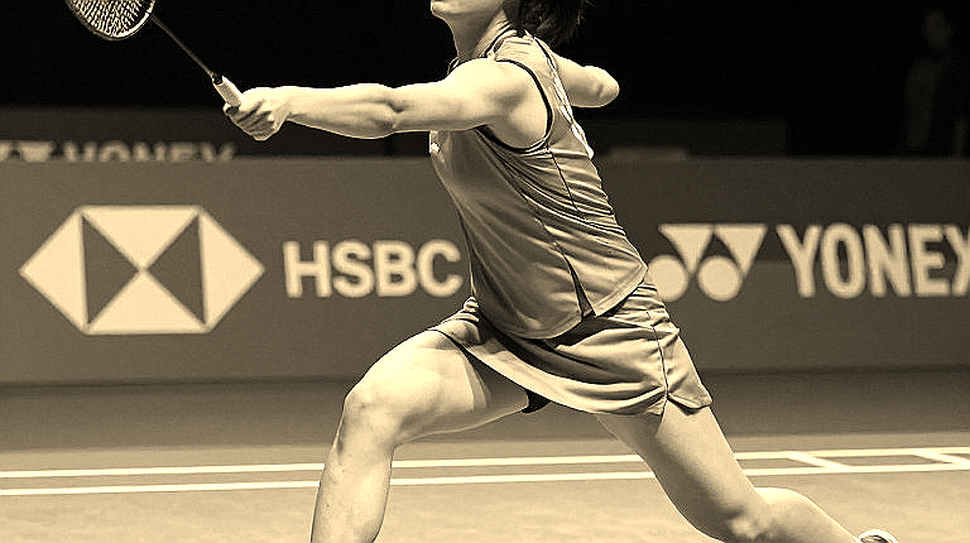
French Open 2026 is a Super 750, and per Khel Now's report this is Sindhu's second final of the season; both finals have come at 750 level, with the Japan Open title in July. By the report's own accounting she has no Super 1000 final this season. Two Super 750 finals and a title at 31 is a strong season, and it is equally true that the strength stops at the 750 ceiling — she is converting against the 8-to-20 ranked field, while the door against the top four is still shut. On Sunday, standing on the other side of that door, is the world No. 1 and reigning world champion An Se Young.
The report offers no tactical detail on Hina Akechi. A Japanese player who takes a 20-22 game off a top-10 opponent almost certainly did it by extending rallies and generating pace into the backhand-side movement, not by out-hitting her. That is inference, not assertion — the report carries no average rally length, no smash speed, no unforced-error count. The three numbers that are missing from the report — rally length, smash speed, unforced errors — are exactly the numbers that travel through the live feed to a market where the sport carries a price. And we fill that empty space with adjectives instead.
The top of women's singles has shifted over the last four years. The 2026-to-2026 model ran on height, a high contact point and a heavy smash; Sindhu is that model's most successful product, and both her Olympic medals came out of it. The current centre has moved toward defence-to-counter and error suppression, and An Se Young is its most complete example. The style counter is a simple piece of arithmetic: the power attacker wants to shorten rallies and break points early; the world No. 1 wants to stretch them and extract her price from the taller player's lungs and legs.
Game one was 21-10, and that is the one stretch where Sindhu genuinely dominated — quick start, high contact point, direct attack at Akechi's body. In game two the score sat 17-16 in her favour. Of the last nine points she won three and lost six, and the game went 20-22. That is the most important number in this match, because she failed to close a game she controlled — and that exact failure is the most expensive one available against a player of An Se Young's profile.

Winning six straight from 15-16 down in the decider is a solid pressure-behaviour signal. It is fair to assume her between-points routine settled and her shot selection cleaned up across the mid-game interval. But a one-match sample does not establish a habit, and it is worth remembering that the six-point run came against an opponent outside the top four.
Seventy-three minutes of three-game badminton, with the final roughly twenty-four hours later. Height and reach give Sindhu a higher smash contact point and better backhand-side coverage; the same body pays an extra lunge-and-recover cost in every long rally. How long An Se Young's semifinal ran is not in the report — one half of the fatigue comparison is simply absent.
Before this match Sindhu's record against An Se Young stood at 0-10, and Sunday's final will be their eleventh meeting. The report notes the two have already met twice in 2026, so the most recent evidence is also negative. It does not say how those losses came — close three-game fights or straight-game one-way traffic. That is the report's largest gap, because without score gaps nobody can judge whether the problem is mostly technical or mostly mental.
Indian coverage tends to turn this record into a “Korean jinx” or a mental block. Ten meetings and ten losses are more than a statistic for any player, but before converting them into psychology it is worth asking where the points actually come from. An Se Young's game is to extend rallies and keep errors at nearly zero; Sindhu's is to break points inside twenty or thirty shots. When a player keeps losing because her weapon does not travel through the other player's shield, that is a structural matchup rather than a mental problem — and the treatment is a change of shot selection on court, not a change of mind.
The second inversion sits in the headline itself. The report calls Sindhu's play “error-free” at one point. A game lost 20-22 and a 15-16 deficit in the decider do not square with an error-free performance. By writing “outclassed” we place ourselves on fragile ground, because if Sindhu plays on Sunday the badminton she played in the second game against Akechi, the story becomes a superstar's decline — when the shortfall was already visible in the semifinal.
One more ledger goes unread. India's three Olympic badminton medals have all come in women's singles, and all three out of the same coaching ecosystem. That is a matter of pride and also a question: two decades of world-class training rested on one private decision in one city. On Sunday night the cameras will be on Sindhu, and the width of that pipeline will not be in any frame.
Whatever the score on Sunday, two things hold. Sindhu is in her second Super 750 final of the season, and the result strengthens her position in the race for the World Tour Finals. The second is that the match will tell us whether the rhythm she found in the third game against Akechi is a pressure habit or a single night's gift. The question is not whether Sindhu can beat An Se Young. The question is whether we will again file a win rescued across 73 minutes under the word “class” — and then demand class from the same player every week.