
Kattash Reveals: We Accepted All of Hayes' Conditions — And Still Lost the Deal
मैकाबी तेल अवीव के हेड कोच ओदेद कैटाश ने कहा कि क्लब किलियन हेय्स के साथ अनुबंध के बेहद करीब था और खिलाड़ी की सभी शर्तें मान ली गई थीं, लेकिन डील नहीं बनी। मुख्य वजह पैसा नहीं, बल्कि गैर-मौद्रिक कारक माने जा रहे हैं — NBA/जी-लीग में लौटने की संभावना, छोटी अवधि और आउट-क्लॉज़ की माँग, तथा सुरक्षा/स्थानांतरण से जुड़ी शर्तें। कैटाश ने यह भी स्वीकार किया कि रोस्टर पोज़िशन के हिसाब से संतुलित नहीं है और गार्ड्स पर वर्कलोड बहुत ज़्यादा है, जबकि इफे लुंडबर्ग चोटिल हैं। यूरोलीग में सैलरी कैप नहीं होने के कारण असली बाधाएँ रजिस्ट्रेशन विंडो और इम्पोर्ट स्लॉट हैं; इज़राइल यूरोपीय संघ से बाहर होने के कारण बोस्मान नियम घरेलू लीग पर अपने आप लागू नहीं होता। इस रिपोर्ट में हेय्स के किसी सांख्यिकीय आँकड़े का उपयोग नहीं किया गया है; उनकी वर्तमान अनुबंध स्थिति, लुंडबर्ग की चोट की गंभीरता और रजिस्ट्रेशन तिथियाँ सत्यापन योग्य नहीं हैं। यह सामग्री केवल खेल-सूचना संदर्भ के लिए है और किसी भी प्रकार की सट्टेबाजी सलाह नहीं है।
Maccabi Tel Aviv head coach Oded Kattash has confirmed on the record that the club came "very close" to signing Killian Hayes and accepted "all his conditions" — and still failed to close the deal. The admission lands with the backcourt already stretched by injury and workload, days before the derby against Hapoel Tel Aviv.
The statement is not merely a transfer update. It carries three messages at once: to fans, "we tried everything"; to agents, "we are serious and solvent"; and to ownership, "the market failed, not the coach". In a single press conference, the club's effort and its summer roster-construction error were both entered into the record.
What Kattash actually said
According to the coach, "We were very close to Killian Hayes. We agreed to all his conditions, but it didn't happen." He made clear the team needs backcourt reinforcement and that the club is scanning the market for guards — "I hope we can bring someone in quickly. We need it."
The most consequential line was the one aimed at roster construction: "The roster is not balanced in terms of positions... a lot of workload and pressure on the guards." That is a head coach publicly criticising his own club's summer plan. The context is unambiguous — Iffe Lundberg is injured, thinning an already thin guard rotation.
The real need is initiation, not scoring
Read the three quotes together and the problem defines itself. This is not a shot-making deficit; it is an initiation-volume and positional-balance deficit. Maccabi needs someone who can handle the ball for 20 to 25 minutes, run pick-and-roll under pressure, and absorb workload from the remaining guards.
That is a very different kind of recruitment. The team needs a third guard, not a star. It is why the list of available names in the market and the actual profile requirement rarely match. If Maccabi is chasing a bigger name, that is an opportunity, not a priority; the priority is reliable minutes.
There is a second dimension. In a thin backcourt, rising workload is not just a performance issue — it is an injury issue. Kattash's warning is a signal rather than rhetoric: on a compressed calendar, a shortened guard rotation is the classic precursor to a cluster of soft-tissue injuries.
Hayes' profile and the EuroLeague fit
Killian Hayes projects as a big, left-handed, pass-first combo guard whose perimeter shooting is regarded as below average. It should be stated plainly that this report uses none of his statistical figures — points, assists, three-point percentage, true shooting — because the available material contains no statistical data, and legacy NBA numbers can be a misleading lens for a EuroLeague projection.
His fit in EuroLeague terms cuts both ways. On the positive side, size at the point of attack helps against EuroLeague's physical, hand-check-tolerant on-ball defence. FIBA and EuroLeague play has no defensive three-second rule, which allows longer paint occupation and rewards long, roaming guards who can read passing lanes.
The negative side is just as clear. EuroLeague half-court spacing is tighter than the NBA's. Against a guard whose three-point shot is not respected, opposing coaches will deliberately go under every screen. The result is the most common EuroLeague playoff failure mode: late-clock isolation and a forced bailout shot.
That gets exposed further in the playoffs, because Final Fours and series are decided in the half-court against switch-heavy, drop-and-recover defences. A guard who cannot punish a dropped big becomes a schematic liability in May. Conversely, a big defensive guard retains value in the playoffs because defensive size never goes cold. This is a one-way-value profile.
Why the deal died: conditions, not cash
The phrase "we agreed to all his conditions" is a significant tell. Clubs rarely describe salary as "conditions"; they say "we agreed on the numbers". "All his conditions" usually means structural asks: short-term length, an NBA or G League out-clause, a buyout trigger, family relocation and security arrangements.
That is the behaviour of a player negotiating optionality on his own career, not one committing to a full European season. And a deal built on that structure would have been fragile from day one — a contract with an exit door left permanently ajar.
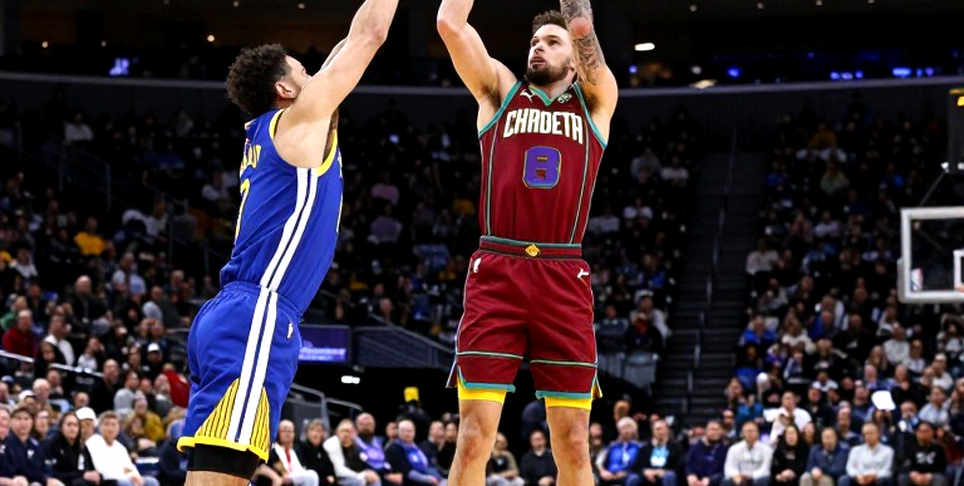
Age sits at the centre of this. A 24-year-old former top-10 draft pick still prices himself against NBA two-way and G League pathways; he has not yet reached the phase where the best available European offer is simply accepted. That asymmetry, more than money, looks like the most plausible reason the deal collapsed.
When a club meets 100 percent of a player's terms and still loses, transaction analysis points to a clear conclusion: the club was beaten on a non-monetary variable, or the player had a strictly superior alternative. The ranked hypotheses run as follows — the player's camp used the offer as leverage while awaiting an NBA or upper-tier EuroLeague route; a family, relocation or security objection; a late medical or eligibility complication; or a rival club arriving at the last minute. The report discloses none of these, and that silence is the story.
One further point is routinely missed: a reclamation signing of this type is inherently a one-year asset. Had Hayes arrived and played well, his next contract would likely have been signed elsewhere — in the NBA or at a bigger-budget EuroLeague club. Maccabi would have been developing a rival's player.
Roster imbalance: a summer error surfacing in-season
"The roster is not balanced in terms of positions" points backwards, at summer team-building, not at the injury. This is not a passing seasonal inconvenience; it is a planning failure presenting as a crisis.
There is a professional dimension too. When a coach publicly questions roster construction, he is inevitably questioning the front office's work. The conflict is not yet open, but the record now exists. If results turn, that quote will protect the coach and indict the front office.
Market pricing and negotiating position
Kattash publicly declared urgency: "I hope we can bring someone in quickly. We need it." In transaction terms, that is the weakest possible position for a buyer. Every agent in the market now knows Maccabi has an injured import, an unbalanced roster, a demonstrated willingness to accept "all conditions", and a derby clock running.
This is textbook price-inflating exposure. Whatever option arrives now costs more because of that disclosure. It is why timing will matter more than the name: a signing completed within days means the club had a pre-identified fallback and simply lost the first choice; a signing that drags for weeks means the market is pricing Maccabi at a discount and the club is genuinely stuck.
There is more. "We accepted all conditions" also implies the club spent its ceiling for this slot, leaving little room for a second move. If Lundberg's absence extends, Maccabi's season will hinge more on internal development than on the market.
Rules, registration and the import quota
EuroLeague has no NBA-style hard salary cap. Budget constraints, licensing and financial-stability rules apply instead. The transaction therefore has to be analysed through the registration window and the import slot rather than cap mechanics — the question is not whether the money exists, but whether the slot exists and whether registration can be completed in time.
Israel sits outside the European Union, so Bosman free-movement logic does not automatically extend to the domestic league. That means even Hayes' French passport would not necessarily relieve an Israeli-league import problem — a point that must be verified against current regulations but which, if correct, turns the signing into a slot decision rather than a money decision.
A third technical layer is FIBA's Letter of Clearance. For a player arriving from the NBA or G League ecosystem, the international transfer document can consume several days, and a mid-season window is unforgiving. That said, if a club is publicly searching for guards on the market, a useful negative inference follows: it has already confirmed it holds a valid slot and an open window. The binding constraint, then, is supply, not legality.
Layers of risk
The first and largest risk is not the lost signing but an injury cascade. Kattash himself flagged excessive workload on the guards. That is precisely the mechanism by which a two-week problem becomes a two-month one.
The second is the weakened negotiating position. Public urgency plus a public admission of maximum concession strengthens every agent's hand.
The third, and the least discussed, is the operating environment. Security conditions have forced Maccabi to stage European home games outside Israel — a situation that makes every import's "conditions" more expensive. If that persists, the club will keep losing contested signings even after meeting every stated term. It is the most plausible structural explanation for the whole episode.
The fourth is reputational. In the Israeli media cycle, a "we can't close" narrative sets quickly. The derby result may prove decisive: a win absorbs the story, a loss converts it into a structural critique of the front office.
Media narrative and the expectation gap
The factual core is trustworthy because it is a coach speaking on the record — no "sources say", no intermediary. But the causal core is entirely missing, and the player's camp has said nothing. This is a one-witness account of a two-party transaction, and every causal framing should be treated as unconfirmed.
The second feature of the narrative is that the public is over-reading Hayes. A 24-year-old former top-10 pick looks like a big name, but a non-shooting guard in EuroLeague is a fit-dependent signing, not a season-changer. He also carries no meaningful high-pressure sample, which is itself a warning sign.
Industry ripple
This is a small instance of a large pattern. EuroLeague sits below the NBA and above domestic leagues, and mid-budget clubs are caught on that ladder — close enough to NBA-adjacent talent to chase it, without the resources to close. The Hayes episode is a clean illustration of the mid-tier squeeze.
The second signal concerns the agency ecosystem: when a club publicly concedes "all conditions" and still loses, it demonstrates that the decisive variables are no longer purely financial. League tier, NBA optionality, living environment and security now carry equal weight. That is a genuine shift in EuroLeague competitive mechanics. Broadcast and media gain short-term attention; sneaker, licensing and other commercial categories show no meaningful impact.
Conclusion: what to watch
Kattash's statement reveals structural weakness more than it reports a failure: a mid-tier EuroLeague club met every stated term and still could not close, at precisely the moment its backcourt depth collapsed.
The watchpoints are clear. First, the timing and profile of the next signing, which will show whether Maccabi still has market access or has been priced out. Second, the derby result against Hapoel. Third, Lundberg's return timeline, the single largest swing variable of the season. Fourth, Hayes' next destination — a move to an upper-tier EuroLeague club would confirm that Maccabi lost on tier, not on money.
There is also an underreported silver lining. The collapsed deal preserved an import slot and budget. Instead of a short-term, out-clause-laden contract for a non-shooting guard, the club can now pursue a cleaner schematic fit — even if the name is smaller.