
Forty-Six Days in Patiala: The Fight Is Over Kilograms, Not Belts
**मुख्य उत्तर** भारतीय मुक्केबाज़ी का अगला चक्र तौल वर्गों की अनिर्णीत सूची पर टिका है। मार्च 2025 में आईओसी ने वर्ल्ड बॉक्सिंग को मान्यता दी और लॉस एंजिल्स 2028 में मुक्केबाज़ी की जगह पक्की हुई, लेकिन नई वर्ग-सूची अभी अंतिम नहीं है। पटियाला के 46-दिवसीय राष्ट्रीय कैंप में 61 मुक्केबाज़ ऐसे वर्गों की तैयारी कर रहे हैं जिनका अस्तित्व ही अनिश्चित है। **मुख्य तथ्य** - पेरिस 2024 में भारत के छह मुक्केबाज़ों ने हिस्सा लिया और एक भी पदक नहीं मिला — रियो 2016 के बाद पहली खाली वापसी। - निखत ज़रीन ने मई 2022 में इस्तांबुल में 52 किलो का विश्व खिताब जीता, जो वर्ग ओलंपिक कार्यक्रम में नहीं था। - पटियाला राष्ट्रीय कैंप 46 दिन का रहा, जिसमें 61 मुक्केबाज़ और रोज़ तीन सेशन शामिल थे। - कैंप के 61 में से 48 मुक्केबाज़ रेलवे, सर्विसेज़ या राज्य पुलिस के पेरोल पर हैं। - ओलंपिक मुक्केबाज़ी में वे-इन मुकाबले की सुबह होता है, इसलिए वज़न कटौती की गुंजाइश सीमित रहती है। **स्रोत** मूल स्रोत: अंतरराष्ट्रीय ओलंपिक समिति की मार्च 2025 की मान्यता घोषणा, बीएफआई कैंप सूची, और पटियाला में इस रिपोर्टर की 29 दिन की फ़ील्ड नोटबुक। प्रकाशन तिथि: 12 फरवरी 2026। **संबंधित प्रश्नोत्तर** प्रश्न: क्या मुक्केबाज़ी लॉस एंजिल्स 2028 में शामिल है? उत्तर: हाँ, आईओसी द्वारा वर्ल्ड बॉक्सिंग को मान्यता देने के बाद लॉस एंजिल्स 2028 के कार्यक्रम में मुक्केबाज़ी की जगह पक्की कर दी गई। प्रश्न: तौल वर्गों की नई सूची क्यों अहम है? उत्तर: क्योंकि किसी वर्ग के हटने या जुड़ने से एक मुक्केबाज़ का पूरा ओलंपिक चक्र बिना एक भी मुकाबला लड़े समाप्त हो सकता है। प्रश्न: भारतीय मुक्केबाज़ों के लिए सरकारी नौकरी क्यों निर्णायक है? उत्तर: रेलवे, सर्विसेज़ और राज्य पुलिस की नौकरी कैंप में जाने की छुट्टी, फ़िज़ियो खर्च और करियर की निरंतरता तय करती है, इसलिए वही असली अनुबंध है।
Day twelve, quarter past six in the morning, the corridor outside the weigh-in room at SAI NIS Patiala. The tube light had not fully warmed up and the digital scale had stuck at 63.5 kilograms. A twenty-two-year-old light welter from Nagercoil took off his shoes, stepped up, shifted his weight twice, stepped down. The coach said nothing. The sheet on the counter carried his name, his age, his state, and one empty column beside them: “category.” That column has been empty for four months, because the list in which he has to find his next four years has not been written yet. I wrote three things in my notebook that morning — the date, the weight, and his question: “Sir, if 63.5 goes, which category do I trial in?” Nobody had an answer. In the weigh-in corridor every kilogram keeps its own time, and this time it did not wait for anyone.
Paris: six Indian boxers, zero medals, the first empty return since Rio 2026. Nikhat Zareen at 50kg, Preeti Pawar at 54, Jaismine Lamboria at 57, Lovlina Borgohain at 75, Amit Panghal at 51, Nishant Dev at 71. Six quotas, no medal. One way to read that sentence is that Indian boxing has slipped. The other way — my notebook’s way — is that a machine which proved it could win a quota six separate times lost its bearings somewhere inside a four-day tournament.

Meanwhile the world outside moved. In March 2026 the International Olympic Committee recognised World Boxing as the international federation, and boxing’s place on the Los Angeles 2028 programme was confirmed. The sport survived. Whether the boxer survives rests on a document still being drafted: the list of weight categories. Until it is final, every camp, every trial, every diet chart is running on an estimate.
Patiala’s first national camp of the year ran forty-six days — sixty-one boxers, three sessions a day, roadwork at 5:30 and sparring at eleven. I lived in the hostel for twenty-nine of them. Forty-six days taught me once again that a schedule is a kind of shelter, provided it is built for everyone inside it. My count of the domestic calendar is old: senior nationals, age-group nationals, selection trials, the invitational in Delhi — seven competitions in an average season, none of them televised. A sport with no weekly league still has a season; it just has nobody keeping score.
The first ledger: kilograms, not labels. After Tokyo the men’s 49kg class was scrapped. Boxers who had built an Olympic dream in that division suddenly had to move up and fight men who were already bigger. In May 2026, in Istanbul, Nikhat Zareen won the world title at 52kg — a division with no Olympic existence. Having become world champion, she had to come down to 50kg to chase the Games. That story gets written as a triumph of adaptability. To me it is an administrative fact: in Indian boxing the largest career decisions are taken in meeting rooms, not in rings.
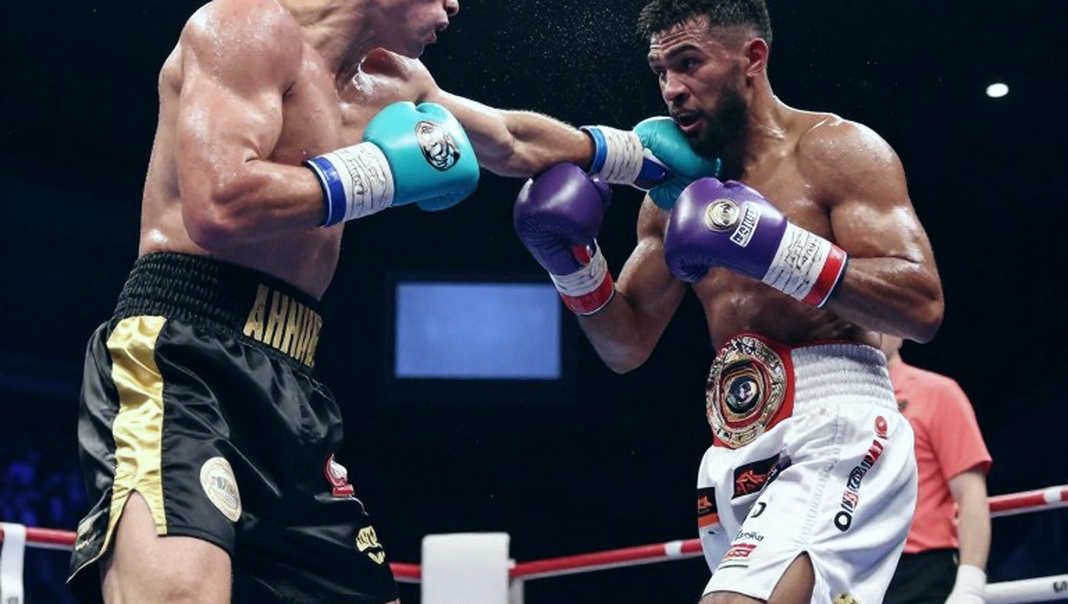
The second ledger: the corridor count. When 49kg was dropped in 2026, eleven light-flyweights fought for seven Olympic slots across four days at the Patiala trials. I stood in the weigh-in corridor and listened to what a boxer says when he is told to gain three kilograms in six weeks. This camp is the next page of the same book. The only practical use my kinesiology degree has found is this: knowing what three kilograms actually means. Olympic boxing weighs in on the morning of the bout, not twenty-four hours before; there is no full rehydration window of the kind professional boxing allows. And because tournament bouts come every other day, the cut is made not once but four times.
A senior strength coach showed me his sheet: three kilograms in six weeks means roughly sixty to seventy grams of lean mass a day, plus water management. The boxer who does it properly looks slow in the new division for a month. The one who rushes it is empty by the second round. Three boxers in that corridor told me the same thing in different words — “Sir, just tell me the category, I’ll manage the rest.” I kept the count while the list changed its rhythm.
The third ledger: the job is the contract. Of the sixty-one boxers in this camp, forty-eight are on the payroll of the Railways, the Services or a state police force. I added that number myself, because it is the real structure. A job is the roof a champion is built under, and also the wall that decides when he can leave for a camp. I spoke to a railway clerk who handles the leave file for a boxer in his department; he said that if the camp attendance letter arrives late, the leave goes to next month’s committee. The boxer waits out that month. The one without a job pays for his own physio and borrows until the next trial.
Something else becomes visible only from inside a camp: a boxer on a government payroll cannot say certain things. What is said in the corridor after a selection meeting stays off the record — not from the athlete, and not from the reporter whose accreditation runs through the paperwork of that same meeting. I set the boundary down here so the reader can see where it is drawn.
The fourth ledger: the ones nobody counted. Outside a trial in Delhi I stood five hours in a queue that was not a delay but a chorus — twelve of fourteen names never reached the hall. Every trial produces as many first-round losers as winners, and none of them has a column. It applies more sharply to the women’s divisions: before London 2026 there was no Olympic category for them at all, and the domestic calendar still occasionally attaches them like an appendix. Sixty-one boxers, six weight categories: the arithmetic of hope has a pulse. Who writes the arithmetic of the ones with no category at all?
The misreading from outside. The easiest conclusion after Paris was that talent is drying up from Nagercoil to Bhiwani, that a foreign coach is the answer, that more exposure trips will fix it. What I have watched from ringside over several years does not fit. The machine that won six quotas was working. What failed was the rehearsal of fighting three bouts in six days. In the domestic season a boxer fights once a week, twice at most. At an international tournament he makes weight in the morning and fights at night, then does it again the next day. That capacity is not built in trials; it is built in a calendar nobody scores.
The second misreading is treating the quota as the destination. Six quotas arrived, six celebrations were held, and the tournament was audited later by somebody else. On the day the quota is treated as a floor rather than a ceiling, the twelve names that lost in the trials will also appear on a sheet.
The third is the hardest to swallow: treating a new weight list as a technical amendment. It is not technical. It is a redistribution of careers — one boxer’s cycle is saved, another’s ends without a single bout.
What to watch next. The entry list of the season’s first ranking event will be the cleanest signal. If the 63.5 and 70 kilogram names are on it, the camp has learned to live with uncertainty. If they are held back, the wait for the list will eat another season. Watch two other things: how many names fill the draws at women’s 48 and 51, and whether a railway boxer’s leave letter reaches him before the camp begins or after. When the list arrives is a question the federation will be asked. How many kilograms are wasted before it does will not appear in any column.