
होमAsian CricketRizwan and Imam Cleared for Quaid-e-Azam Trophy, But PCB's 'Permission' Is Not 'Exoneration'
Rizwan and Imam Cleared for Quaid-e-Azam Trophy, But PCB's 'Permission' Is Not 'Exoneration'
मोहम्मद रिजवान और इमाम-उल-हक को PCB ने क्वेड-ए-आज़म ट्रॉफी में खेलने की अनुमति दी है, लेकिन यह 'क्लीयरेंस' 'बरी होने' के बराबर नहीं है। यह एक प्रशासनिक अनुमति है, जो NCCIA की ऑनलाइन सट्टेबाजी जांच और इंग्लैंड दौरे के ड्रेसिंग रूम लीक मामले के बीच दी गई है। किसी भी सूचना बिंदु में दोनों खिलाड़ियों पर आरोप या दोषसिद्धि की पुष्टि नहीं हुई है। रिजवान पेशावर और इमाम मुल्तान के लिए खेलेंगे; टूर्नामेंट तीन नवंबर से शुरू हो रहा है। चयन पर असर जांच के नतीजे और PCB के रुख पर निर्भर करेगा, सिर्फ घरेलू फॉर्म पर नहीं।
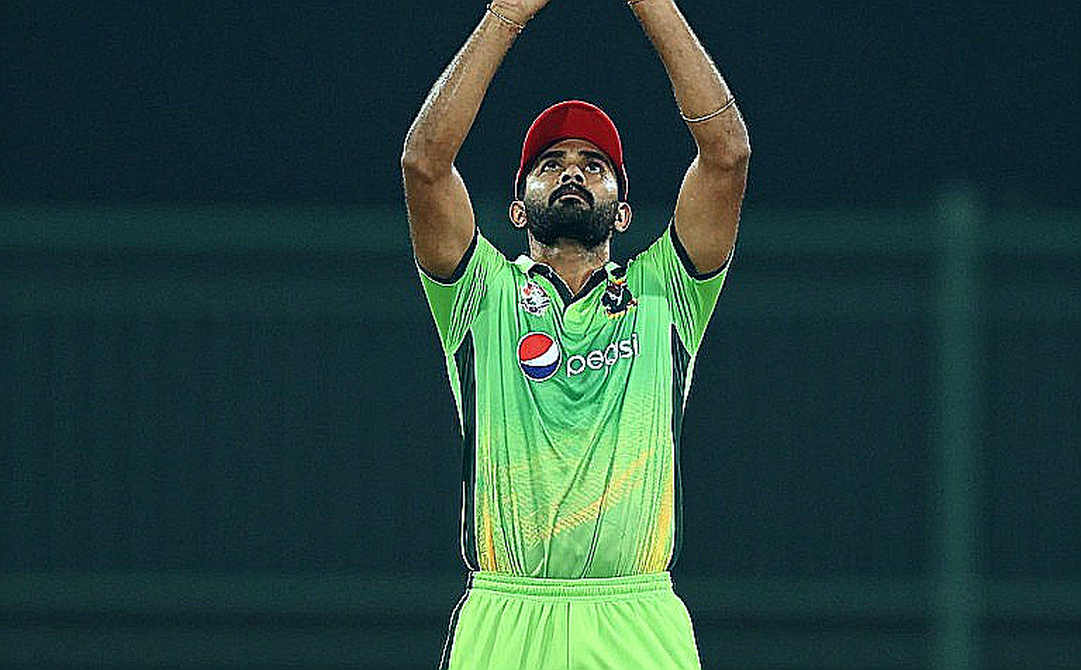
A fresh report by Geo News has stirred up Pakistani cricket. According to the report, senior players Mohammad Rizwan and Imam-ul-Haq have finally been granted permission to play domestic first-class cricket. Both players will turn out for their respective regional sides in the upcoming Quaid-e-Azam Trophy. Rizwan will represent Peshawar, while Imam will play for Multan. The tournament's first round begins on November 3.
On the surface, this looks like a straightforward player-availability story. But the real layer of this news runs much deeper. In fact, the Pakistan Cricket Board (PCB) had withheld permission for both players for the first six rounds of the President's Trophy. Only now, ahead of the tournament's seventh and final round, have they been allowed to take the field. The entire sequence shows that this is not a cricket-rule matter, but an active law-enforcement investigation.
The first and most important thing to understand here is that 'clearance' and 'exoneration' are two completely different things. What the PCB has given is merely an administrative permission, not a judicial verdict. No information point states that either player has been charged, let alone found culpable. The permission has also been granted before the investigation concluded, which is itself a significant signal.
The scope of the investigations and their two separate directions
According to the report, two separate investigations are running in this matter, which are being conflated in public perception when they should be kept apart.
The first investigation is being conducted by the National Cyber Crime Investigation Agency (NCCIA), probing allegations related to online betting and gambling. This matter is likely related to the players' personal conduct and may not necessarily fall within the core jurisdiction of the ICC Anti-Corruption Code. Gambling is legally prohibited in Pakistan, so this case may fall under the country's criminal law, where the range of penalties is entirely different from ICC rules.
The second investigation relates to the leaking of dressing-room information during the England tour. This is a classic anti-corruption and team-integrity matter that falls squarely within the ICC's domain. Viewing the two investigations together makes the case against the named players appear more severe, whereas there is no evidence that they are subjects of both matters.
Third, the concern raised about the fitness-report submission deadline is a separate contractual issue and should not be read as corroboration of the corruption allegations. Bundling these three together in the media is narrative construction, not fact.
The two players' situations are not the same
The biggest analytical error in this entire story would be to weigh both players on the same scale. The truth is that they are at completely different stages of their careers.
Imam-ul-Haq is around thirty years old, meaning he is inside the peak batting window (27 to 33). For him, every first-class innings played now is an opportunity for maximum utilisation. As a left-handed opener, his Test utility lies mainly in home conditions. But that is also his biggest limitation — the movement of the new ball against pace, especially in conditions like England and Australia, has been his known technical vulnerability. His scoring rate in the Quaid-e-Azam Trophy will look reassuring, but it will be analytically almost worthless for away-tour selection.
On the other hand, Mohammad Rizwan was born in mid-2026, meaning he is currently between 30 and 35. As a wicketkeeper-batter, this is the stage where the keeping workload in red-ball cricket must be actively managed. Every additional first-class match is as much a cost as a benefit for him. The constant bending and rising pressure on the lower back and lower body, especially in a compressed calendar, creates a real injury risk.
It is also worth noting that both players have captained their departmental sides — Rizwan for SNGPL and Imam for OGDCL. This means the PCB was withholding participation not from fringe players but from two leadership-level figures. This detail is buried in the report, but its significance is enormous. Immediately taking on captaincy responsibility upon return — full batting responsibility, field settings, and for Rizwan, full keeping duties — further compounds the workload risk.
The domestic structure and two parallel tournaments
Pakistan's domestic first-class structure is a big story in itself. Two parallel first-class tournaments run in the same season — the President's Trophy (between departmental sides) and the Quaid-e-Azam Trophy (between regional sides). This dual structure not only compresses the calendar but also produces less clean and reliable data for selectors.
Departmental teams — SNGPL (Sui Northern Gas Pipelines Limited), OGDCL (Oil and Gas Development Company Limited), KRL (Khan Research Laboratories) — are a distinctive feature of Pakistani domestic cricket. These are government or state-owned enterprises that employ players. But when key employees of these institutions come under investigation for betting-related allegations, the impact is not limited to cricket. It also becomes a risk tied to public-sector image.
One more thing emerges in this entire sequence — the PCB's stance. The board issued no formal charge, set no timeline, specified no clear standard, and offered no appeal path. Only 'not granting permission' — a process that does not appear to be based on any published rule. This is the weakest administrative aspect of the whole matter. It can be called a 'soft suspension', where a player can be kept out of the game indefinitely without any formal charge.
It is also worth noting that permission was granted before the investigation concluded. One logical implication is that the PCB lacked a solid legal basis to keep withholding permission for long, and the original restriction may have rested on administrative discretion rather than a codified rule. This is a relief for the players, but also a weakness for the system.
Impact on selection, form and performance
Now the most important question — does this permission mean both players' return to the national team is assured? No.
First, the question of selection. Selectors do not look only at form when picking a player. When an investigation is running against a player, selectors may naturally lean toward 'clean image' alternatives — even if not for cricketing reasons. This is a selection distortion that is the least discussed but most impactful aspect of this entire story.
Second, the question of form. Throughout this window, both players had only one round of the President's Trophy available. One match cannot be proof of a 'return to form' for any player. Especially for an opening batter and a wicketkeeper-batter — two of the most rhythm-dependent roles in the game — one match is merely a sharpness top-up, not a full preparation block.
Third, the long gap from September to the final round. The President's Trophy began on September 12, and permission came ahead of the seventh round. This means roughly two months in which both players were out of competitive cricket. Such a long gap not only affects fitness benchmarks but also reduces a player's 'visibility' in the selectors' eyes.
Assessment in the context of Test cricket
One basic point needs to be clarified here — this entire story relates to the Test format, not ODI or T20. Rizwan's identity is that of a limited-overs superstar, and his T20 strike rate has been a constant target of criticism because his anchoring style conflicts with the tempo requirements of modern T20. But his Test record is respectable — not dominant, but acceptable. A strong Quaid-e-Azam Trophy run can strengthen his place in the Test team, but it will have no bearing on the T20 criticism. Conflating the two would be an analytical error.
For Imam, the case is different. His Test record is strong in home conditions but limited on away tours. The slow, low pitches of the Quaid-e-Azam Trophy will feel comfortable to him, but this is not the same examination that is the biggest question of his career — facing the new ball against pace.
Risks and the way forward
The biggest risk in this entire matter is not cricketing but legal and reputational. The loss of one domestic season is recoverable, but an adverse integrity finding is not.
The second major risk is the governance precedent. If the PCB's discretionary power to 'withhold permission' becomes an accepted tool, any player can be sidelined indefinitely without charge. This is a systemic risk to the entire player pool, not just these two.
The third risk is workload. One match of sharpness, then immediately captaincy-level responsibility, and that too in a compressed calendar — this is not a good sequence for injury avoidance.
What next? The first two rounds of the Quaid-e-Azam Trophy starting November 3 will be the credibility window for both players. But the real decision will not be made on the field but at the investigation table. The outcome of the NCCIA investigation, the PCB's stance, and the announcement of the next Test squad — these three together will determine whether this story becomes one of 'return' or of 'investigation'.
For now, one thing is clear — Rizwan and Imam will take the field, but the cloud of questions hanging over them has not yet lifted. And while reading this news, it is essential to understand the difference — 'permission' and 'exoneration' are not the same thing.
संबंधित खिलाड़ी
अनुशंसित
Nissanka Fails Fitness Test, Out of Pakistan Tests: Sri Lanka's Real Problem Runs Deeper Than the Top Order2026-10-28
Trophy Lifted in Dubai, Hosting Left in Pakistan: How the Hybrid Model Redrew Asian Cricket's Map2026-11-03
Pakistan's EDF Money Moves From Treasury to Bank: Approval Granted, the Ledger Is Still Empty2026-10-30
RCB's Title in the Headline, 17 T20Is in the Footnote: Reading S Meghana's Ledger2026-10-24
The Asia Cup's Real Venue Is Kuala Lumpur, and the Books Are Filed With No Registrar2026-11-02
अनुशंसित
Ahmedabad's Night, Adelaide's 36, and the File That Won't Let a Defeat End2026-11-01
India vs New Zealand 5th T20I: The Series Is Already Won, So Is the Eden Park Defeat a Lesson or Just Noise?2026-11-02
The No. 3 Question: Vaibhav Sooryavanshi's Innings Is Smaller Than a Headline That Forgot the Format2026-10-26
The Architecture of Asian Cricket: One Region, Many Formats, Three Tiers2026-11-02
Nabi's 300 Wickets: Counting an Old Pillar, and Afghanistan's Empty Third Step2026-10-25