
Karmine Corp Knocks Out LCP's Last Team, Swiss Stage Now Hinges on Saturday Decider
करमाइन कॉर्प ने वर्ल्ड्स 2026 स्विस स्टेज के राउंड 4 (गुरुवार, 29 अक्टूबर 2026) में CTBC फ्लाइंग ऑयस्टर को हराया, जिससे LCP का आखिरी प्रतिनिधि टूर्नामेंट से बाहर हो गया। गेम 1 28 मिनट में 18–3 के किल स्कोर पर समाप्त हुआ; गेम 2 37 मिनट चला (किल आंकड़े उपलब्ध नहीं)। गेम 1 के लिए पहला साइड चुनने का अधिकार CTBC के पास था। इस नतीजे के बाद स्विस स्टेज का अंतिम क्वालिफिकेशन स्थान शनिवार के डिसाइडर मुकाबले में तय होगा, और ग्रैंड फ़ाइनल शनिवार 14 नवंबर 2026 को है। उपलब्ध रिपोर्ट में चैंपियन पिक/बैन, पैच संस्करण या किल आंकड़ों का अभाव है, इसलिए पैच-स्तरीय मेटा निष्कर्ष संभव नहीं।
In Round 4 of the Worlds 2026 Swiss Stage on Thursday, 29 October, Karmine Corp defeated CTBC Flying Oyster. This is not merely the result of one series — with this loss, the LCP (League of Legends Championship Pacific) also lost its last remaining representative at Worlds 2026, and the rest of the Swiss Stage now hinges on a decider match to be played on Saturday. For the European organisation, it is the win that kept its campaign alive; for the Pacific region, it is the end of a tournament that began with considerable expectation.
Key facts at a glance
- Match: Worlds 2026, Swiss Stage, Round 4 — Thursday, 29 October 2026.
- Result: Karmine Corp defeated CTBC Flying Oyster; CTBC eliminated.
- Game 1: ended at 28 minutes, kill score 18–3 (source: GosuGamers).
- Game 2: lasted 37 minutes; kill data not disclosed in public reporting.
- Side selection: CTBC had first choice for Game 1, took "first pick," which placed Karmine Corp on the blue side.
- What comes next: the Swiss decider on Saturday; the Grand Final on Saturday, 14 November 2026.
The arithmetic of the Swiss Stage and the price of this result
The basic logic of the Swiss format is clear — reach the win threshold and you qualify; reach the loss threshold and you are out. Reaching Round 4 means both teams were standing precisely in the middle of that balance, where every series carries double weight. In such matches, a win does not just add a column to the win tally; it redraws the geography of the entire bracket — who moves into which pool, who must play an extra match, and whose run ends here.
Thursday’s series redrew exactly that geography. For Karmine Corp, it is the win that kept the team alive in the Swiss Stage and stopped its position from slipping out of its control. For CTBC Flying Oyster, it is the loss after which no arithmetic remains — with the series gone, so is the Worlds campaign, and with it the campaign of the entire region for which it was the last representative. For the LCP, this is the kind of ending that stings the most: the team reached Round 4, meaning it was genuinely in the fight, only to watch the final door close at the last step.
At the same time, this result shaped the Swiss Stage into the form in which Saturday becomes decisive. A decider match is the moment the bracket settles its final place — and after the night of 29 October, that date is now the most important on the calendar.
Game 1: 28 minutes, 18–3 — what kind of win was this?
The first game tells its own story on the scoreboard. Twenty-eight minutes and an 18–3 kill score — in League of Legends this combination generally signals a situation in which one team built such a lead during the laning phase that the mid-game never stalled. Eighteen kills means sustained, repeatedly converted advantage; three kills means the opposing team never got a window to respond. And 28 minutes means that advantage was turned into objectives without delay — no long pause, no wasted waiting, no phase in which the other team could reach its scaling window.
In technical terms, this was a game of tempo conversion — take an early lead, convert it immediately into map pressure, and then turn that pressure into gold that cannot be clawed back. When a team wins 18–3 at the 28th minute, it usually does not win off a single miraculous teamfight; it wins by stacking small gains continuously, where each gain opens the door to the next.
One clear limit must be stated, however: public reporting contains not a single champion pick or ban. To claim that this win came from a particular draft pattern, a particular meta champion, or one player’s individual brilliance would therefore be speculation, not fact. The only fact is that this game was fast, one-sided and short.
Game 2: 37 minutes — the change of pace
The second game ran 37 minutes. That is nine minutes longer than the first, and in any reasonably balanced series that gap is not trivial. Nine extra minutes usually suggest one of two things: either the match was far more contested and neither team could break the other for a long time, or at least one team chose a heavily scaling draft that deliberately stretched the game out.
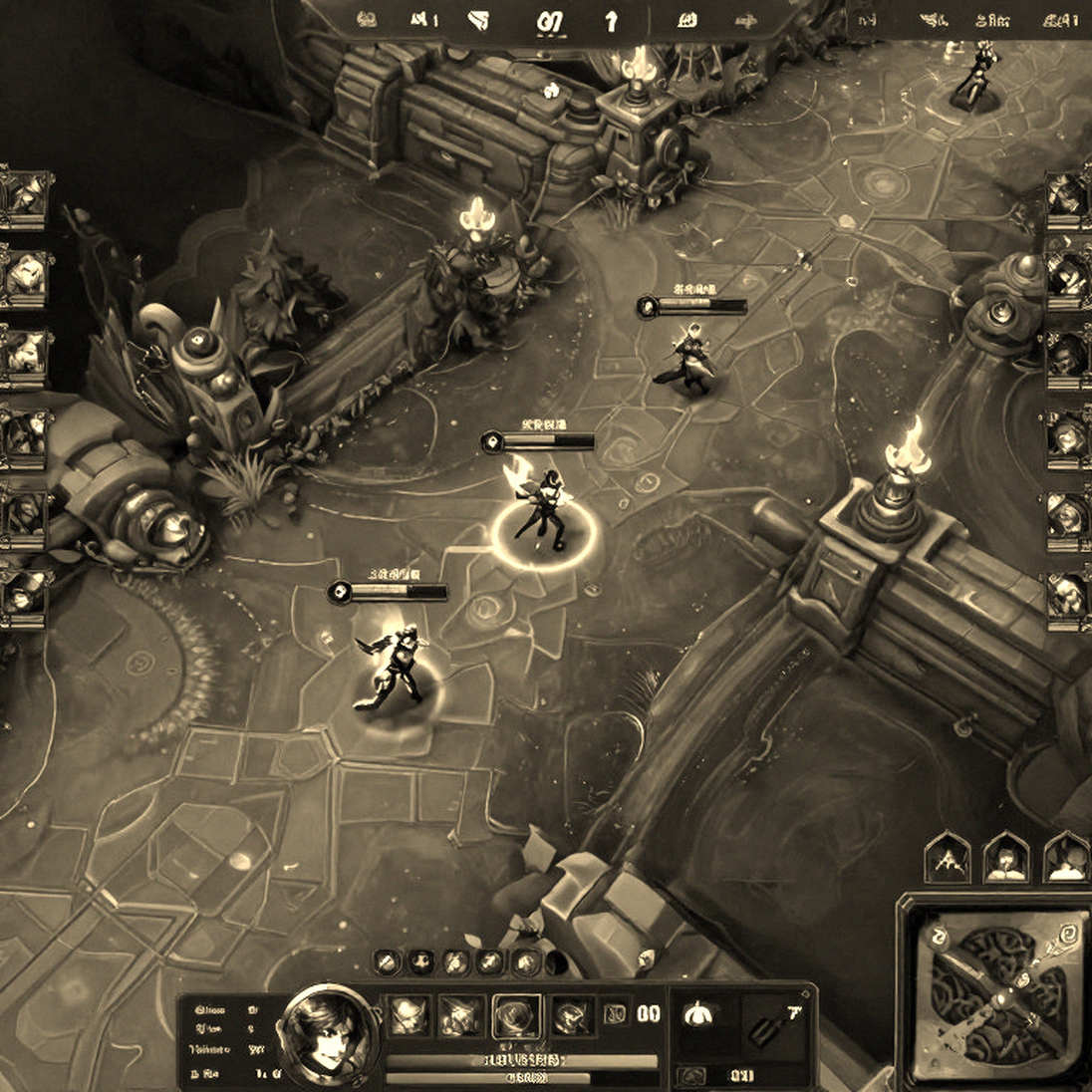
Honesty is required here: the report does not give the kill score for the second game. The "contested match" conclusion is therefore an inference drawn purely from duration, not a verified fact. If the second game’s kill score had also been one-sided in the style of 18–3, the longer duration would mean something else — for instance, a team building a lead but taking too long to close it out. Without the numbers, that claim would be wrong to make.
What can be said without any doubt is this: Karmine Corp won two completely different shapes of game in this series. One 28-minute blitz, and one 37-minute game of patience. For any team, that is no small signal. It means the win did not depend on a single weapon — not solely a fast-tempo draft, nor solely a late-game scaling plan. Demonstrating the ability to win both kinds of game, even on the basis of one series, is weak but real evidence of multi-speed adaptability.
Draft and side selection: what is known and what is not
Before Game 1, CTBC Flying Oyster held the right to choose a side. According to the report, it chose "first pick," which placed Karmine Corp on the blue side. On the surface this is a simple fact, but it contains a technical tangle that should not be ignored. Under the standard League of Legends draft order, the blue-side team holds the first pick. If CTBC took "first pick" and Karmine Corp ended up on blue side, those two statements collide under standard rules.
There are three possible explanations: first, the report conflated "choosing a side" with "pick order"; second, the event used a non-standard draft order; third, it is a straightforward reporting error. The result does not change in any of these cases, but there is one consequence — any analysis of "who held the draft-side advantage" in Game 1 remains unreliable until the original information is clarified. For readers, this is worth remembering: when a report contains a detail that collides with the fundamental rules, pause before drawing deep conclusions from it.
Likewise, no comment can be made in this series about any team’s champion-pool depth, any player’s one-trick reliance, or the strategic patterns of bans and picks. That would require draft data, and the report simply does not contain it.
CTBC and the LCP: the end of a region, and why
The elimination of the LCP’s last representative is a bigger issue than one team’s defeat. At a tournament like Worlds, regional representation is not merely symbolic — it affects next year’s preparation, sponsorship, audience trust and player market value. When a region’s last team goes out in Round 4, the question is not only "where did it go wrong," but also "where does this region’s comparative strength actually stand."
Looking at CTBC’s performance, one contradiction is clear. The team got this far, meaning it did something right in earlier rounds. It also held the right to choose a side, meaning its position in the bracket was not so weak that it received no concession. Yet the first game ended at 18–3 in 28 minutes — a score that indicates a significant gap in the matchup or in preparation, and that gap cannot be explained by luck alone. The second game ran longer, meaning the team stabilised to some degree, but in the end that one did not go its way either.
To be honest, this report cannot determine where CTBC’s real weakness lay — in draft, in mid-game calling, or in individual mechanics. That would require VOD analysis and draft data. What can be said is that the team fell behind in both shapes of game, and that is a pattern pointing not at a single mistake but at overall preparation.
Patch and meta: the analysis this report cannot support
Here is an uncomfortable truth that should not be hidden: no patch-level conclusion can be drawn from the information available about this series. The report contains no version number, no champion picks, no item builds, no objective-control statistics. Under those conditions, building any story about "which style won on this patch" would be fabrication, however attractive it might look.
The only defensible meta conclusion is a very narrow one: Karmine Corp won the first game by converting a fast tempo into a lead, then won a considerably longer second game as well. From that, one can say the series was not decided by a single repeatable draft trick. Anything beyond that is inference.
The question of tournament patch locking is also interesting. Worlds is traditionally played on a locked tournament patch, but no version number is given here. If the tournament patch differed from live — and it usually does — then work done on practice servers transfers only partially. That is a real risk, but it cannot be measured from this report.
Saturday’s decider: what is at stake
The Swiss decider is not just another match; it is a compression point for the whole tournament, where the arithmetic of five rounds collapses into a single series. Teams that reach Saturday have more preparation time than usual — which means draft preparation and scrim priorities can shift considerably over two days. The psychological benefit of a Thursday win is therefore limited, because the opposing team has every opportunity to improve.
The most practical effect of the 29 October series is that it clarified the uneven balance that existed after Round 4. The bracket now has a single path left — Saturday, and then straight toward the Grand Final. For the teams that play the decider, it will be the longest and most uncertain wait of the season; for those whose door has closed, it is a long post-mortem.
Timeline: 29 October to 14 November
- Thursday, 29 October 2026: Swiss Stage, Round 4 — Karmine Corp defeated CTBC Flying Oyster; the LCP’s last representative eliminated.
- Saturday, 31 October 2026: Swiss decider — the final qualification place decided.
- Saturday, 14 November 2026: Grand Final.
The two weeks in between are knockout-stage preparation, and with them come the questions that arise every year — does Swiss Stage form transfer to the knockout bracket? For Karmine Corp that question is sharper still, because it has just won two entirely different shapes of game, and the knockout stage will demand handling three or four different scenarios in a row within a single best-of series.
Karmine Corp’s profile: limited but meaningful signals
What can be said about Karmine Corp from this one series should be split into two parts. The first part is factual: it won a 28-minute game with an 18–3 kill score, and then also took the longer 37-minute game. The second part is inferential: this suggests the team has more than one way to win, meaning it is not running on a single formula.
But this inference should not be overplayed either. Two games is a very small sample. A team that can win two different game shapes can still be trapped by a completely different problem in the next series — especially when the opposing team has two days to read it. That is why this win should be viewed as an option rather than an advantage.
One more point: this win matters for Karmine Corp because a Round 4 victory in the Swiss Stage often changes not just the score but the confidence level inside the team. When you win a game 18–3, the tone of your calling changes in the next match — more aggressive, faster. Whether that is good or risky will depend on the opponent.
What to watch next
Three things will matter most before Saturday’s decider. First, side-selection strategy — the choice between blue side and red side usually reveals what kind of game a team wants to play, fast aggression or reactive balance. Second, the lesson of the first game — if a team lost a series in 28 minutes, the necessary question is whether it changes its draft to stop early pressure. Third, mental stability — the Swiss decider is hardest for teams that have already come close and missed.
And one more thing worth tracking: whether Saturday’s match also leans toward a fast game or a long one. Thursday’s series showed both routes — one extremely fast and one considerably longer. If the decider repeats that pattern, it would signal that the preparation gap between teams in the Swiss Stage is genuinely large.
Conclusion
On the night of Thursday, 29 October 2026, Karmine Corp did its job: it beat CTBC Flying Oyster, eliminated the LCP’s last representative, and pushed the Swiss Stage toward Saturday’s decider. The gameplay-level reading of this series is simple — a one-sided 18–3 game in 28 minutes, followed by a long 37-minute game, both won. The analytical reading is harder — this report contains no champion, patch or draft data, so linking this win to any specific strategic cause is not yet possible.
What stings most is the end of CTBC Flying Oyster and the LCP — a team that held the right to choose a side, that reached Round 4, and still turned back at the final door. And what binds most is Saturday: one day, one series, and the outcome of the entire Swiss Stage. The road to the Grand Final on 14 November will now pass through that single day’s test.