
Commonwealth Kabaddi Championship 2026, Day 1: The Team That Hasn't Raided Sits Above England
**मुख्य उत्तर:** कॉमनवेल्थ कबड्डी चैंपियनशिप 2026 के दिन-1 पॉइंट्स टेबल में नाइजीरिया (ग्रुप A, चौथा), बांग्लादेश (ग्रुप B, तीसरा) और कनाडा (ग्रुप B, चौथा) बिना एक भी मैच खेले मध्य क्रम में हैं, क्योंकि रैंकिंग पहले जीत और फिर स्कोर अंतर से तय होती है और शून्य अंतर ऋणात्मक अंतर से ऊपर रहता है। **मुख्य तथ्य:** - ग्रुप A: श्रीलंका 48-21 (+27), भारत 46-26 (+20), युगांडा 45-29 (+16) — क्रम पूरी तरह स्कोर अंतर से तय। - ग्रुप B: स्कॉटलैंड 59-30 (+29), केन्या 48-28 (+20); बांग्लादेश और कनाडा अभी नहीं खेले। - लवप्रीत ब्रार (स्कॉटलैंड) के 23 रेड अंक रिपोर्ट का एकमात्र व्यक्तिगत आंकड़ा हैं। - ग्रुप A में सात और ग्रुप B में छह टीमें; ईरान और दक्षिण कोरिया टूर्नामेंट में शामिल नहीं हैं। - दिन-1 के पांचों मैचों का कुल स्कोर 69 से 89 अंकों के बीच रहा, औसत 76। **स्रोत:** Khel Now, कॉमनवेल्थ कबड्डी चैंपियनशिप 2026 दिन-1 स्टैंडिंग्स रिपोर्ट, अहमदाबाद (2026)। **संबंधित प्रश्न-उत्तर:** प्रश्न: क्या कबड्डी कॉमनवेल्थ गेम्स का हिस्सा है? उत्तर: नहीं — कबड्डी कॉमनवेल्थ गेम्स कार्यक्रम में शामिल नहीं है; यहां "कॉमनवेल्थ" केवल सदस्यता-लेबल है, खेल-संरचना नहीं। प्रश्न: क्या दिन-1 की स्टैंडिंग्स से टीमों की असली ताकत तय की जा सकती है? उत्तर: नहीं, क्योंकि तीन टीमें बिना खेले मध्य क्रम में हैं और क्वालिफिकेशन नियम भी घोषित नहीं किए गए। प्रश्न: ईरान इस चैंपियनशिप में क्यों नहीं खेल रहा? उत्तर: ईरान कॉमनवेल्थ सदस्य नहीं है, इसलिए यह आयोजन-फ्रेम उसे स्वतः बाहर कर देता है — जबकि वह कबड्डी की विश्व स्तर-दो टीम है।
There is a line in the Ahmedabad points table that nobody read. Group A shows four names — Sri Lanka, India, Uganda, Nigeria. The first three played. The fourth did not. And yet Nigeria sits fourth, with England below it: England, which lost 26-46 to India after putting more than seventy raids and tackles on the mat. In Group B, Bangladesh is third and Canada fourth, both without playing a single match, while Australia — beaten 30-59 — is fifth.
This is not a typing error. It is the architecture of the table. And it is the actual story of Day 1 — not the scores, the structure.
I added up all five scorelines. Sri Lanka 48-21, a total of 69. India 46-26, 72. Uganda 45-29, 74. Scotland 59-30, 89. Kenya 48-28, 76. Five matches, 380 points, an average of 76. The Scotland-Australia total of 89 was the highest of the day. A standard report will call that an exciting contest. I will call it something else: 89 points means neither side had a functioning seven-man defensive structure. When two teams cannot stop each other, the score climbs to 89 — that is not evidence of competition, it is evidence of its absence.
Everyone will remember the Day-1 scores. I went back for the column nobody filled in: matches played.
The Commonwealth Kabaddi Championship 2026, Ahmedabad. Thirteen men's teams, two groups. Seven in Group A, six in Group B. This is a multi-nation tournament sitting clearly below the Asian Games tier and entirely outside the Pro Kabaddi League's year-round calendar. No franchises, no crore-rupee auction, no retention rules. Just national teams, a mat, and a table.
Since July 2026 most of us read kabaddi through the PKL lens — bonus-line raiding, running hand-touches, athletic corners, chain tackles. Step outside that calendar and the rules stay the same but the environment changes. Nobody here is cutting a clip after every raid. A scoresheet is produced, and the news is built from it. So: rules first, numbers second, argument third.
Two teams, seven players each, a 13m × 10m mat. The attacking side sends one player — the raider. Within thirty seconds he must touch someone in the opposition half and return safely. One touch, one point. Throughout the raid he must chant "kabaddi, kabaddi" — the cant. Break the cant and the raid is dead, the raider is out. That is the rule that separates this sport from every other: the attack must be completed in a single breath.
The defence stops him collectively — pulling him down, gripping an ankle, closing the corridor. If he fails to return, the point goes to the defence. A deep line in the opposition half is the bonus line: one point for crossing it, but only when six or more defenders are on court. And the biggest lever: when all seven of one side are out, the opponent gets two extra points and the entire eliminated team returns to the mat. That is why kabaddi swings so violently. After two consecutive empty raids, the third becomes do-or-die — fail there and the raider himself is out. Three or more points in a single raid is a super raid; a tackle completed against three or fewer defenders is a super tackle, worth two.
These rules set the scale of scoring. A normal match totals between 70 and 90. All five Day-1 matches sit inside that band, from 69 to 89. The numbers are not impossible. They are merely incomplete.
Now the thing the report never says. The second-strongest team in the world is not among these thirteen. Iran is not here. South Korea is not here. Which means this tournament is not answering who is best at kabaddi. It is answering who is best among Commonwealth members. Those are different questions, and one table cannot weigh both.
The arithmetic of the table: what the ranking rule actually is
The report does not state the ranking rule. I did not need it to. I added the numbers. Group A: Sri Lanka +27 (48-21), India +20 (46-26), Uganda +16 (45-29) — ordered exactly by margin. Group B: Scotland +29 (59-30), Kenya +20 (48-28) — same order. So the rule is wins first, then score difference. That is what makes the factual layer of this report trustworthy: the numbers reconcile, they can be checked, they hold. In journalism that is not a small thing.
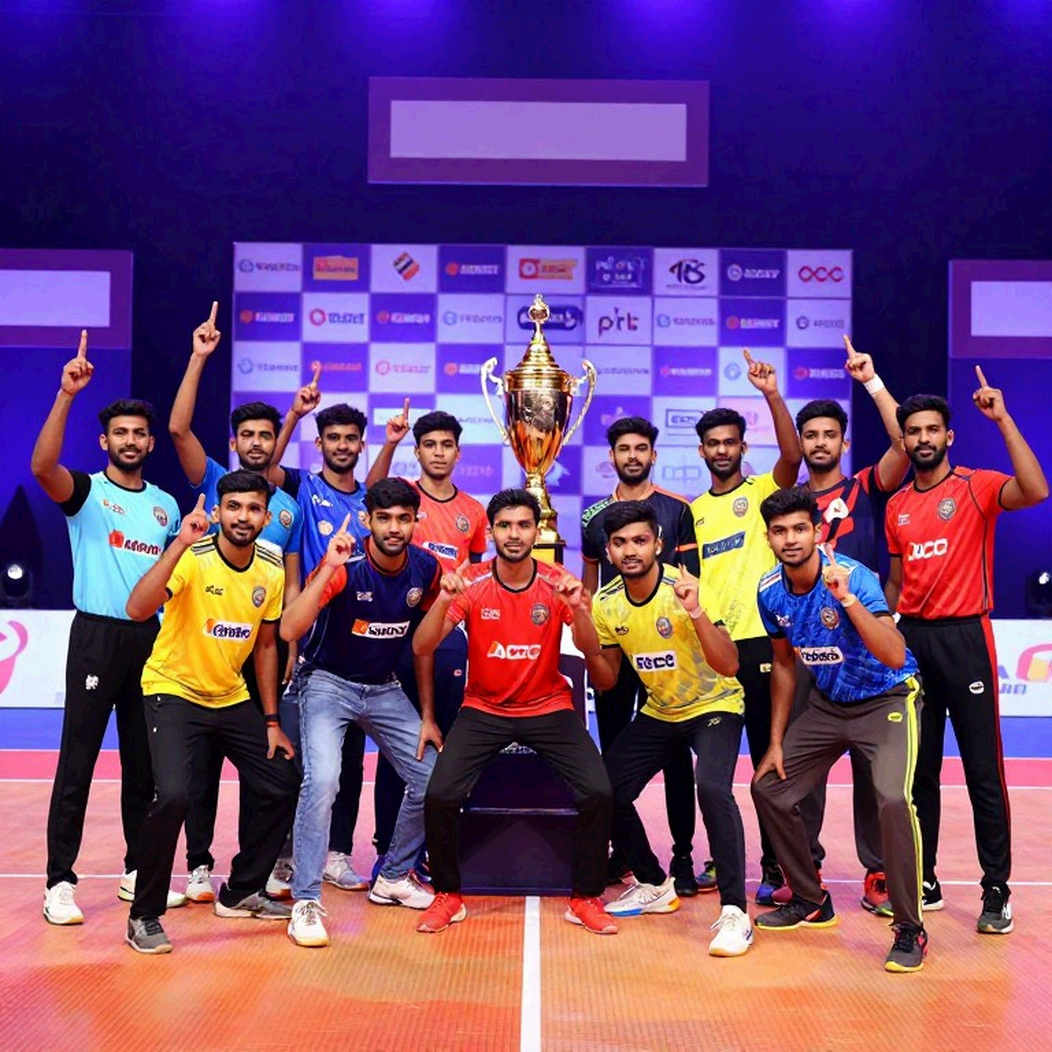
But the same rule has a second face. Teams that have not played rank above teams that have lost. Zero difference is not less than zero, so Nigeria is fourth, Bangladesh third, Canada fourth. This is not an error in the report; it is the mechanics of the table. The consequence is that the Day-1 standings carry almost no predictive value. No reader can look at them and say who advances.
Add one more detail. Group A has seven teams, Group B six — so Group A sides play six matches, Group B sides five. The report names only six Group A teams: Sri Lanka, India, Uganda, Nigeria, England, Malaysia. The seventh is nowhere. But arithmetic says it must be Sri Lanka's victim, because three matches consume six teams. One team's name is missing while its 21-point defeat is visible. That is the kind of omission no ordinary reader notices and no analyst sleeps through.
"Commonwealth" is a filter, not a measure
This is the most important analytical point about the whole event, and the report does not touch it. Kabaddi is not on the Commonwealth Games programme. That is checkable. So "Commonwealth" here is not a description of sporting structure; it is a membership label. And a membership label functions as a filter.
That filter excludes Iran. Iran is not a Commonwealth member. Remember what Iran is: the team that broke India's men's gold monopoly at the Asian Games. The filter also excludes South Korea, which is investing in kabaddi systematically. So when someone says "kabaddi is globalising, look, thirteen nations are playing," the first question should be: where is Iran? The answer is: outside. And when the world number two is outside, thirteen nations is not expansion. It is filtration.
I have to open an old wound here, because it sits directly in this argument. Jakarta 2026. India lost 23-24 to South Korea in the group and 18-27 to Iran in the semifinal — the first Asian Games gold they had ever missed. Two months earlier I had written that Iran was not a spoiler but a co-favourite, built on Fazel Atrachali's PKL tackle numbers. Forty hours of abuse followed, then the result. Russia gave me the format; Jakarta gave me the proof. Since that day I keep one rule: name the failure mode in advance, date the prediction, republish the receipt.
So since 2026 any honest preview names Iran as co-favourite, and any line claiming gold is guaranteed fails the most checkable fact in the sport. The Ahmedabad table is the same truth in another form: Iran is absent, so India's dominance will look self-evident here — and that dominance will prove nothing.
Seven versus six: the format invites blowouts
Five matches in a six-team group, six in a seven-team group. Two distortions follow. First, cross-group score-difference comparison becomes inherently unfair because total matches differ. Second — and more interesting — in the smaller group a single blowout can decide top spot, so the incentive to pile on points against a weak side is sharper there.
Scotland's 59-30 is that incentive at work. So is Sri Lanka's 48-21. When the second ranking criterion is margin, the rational act for a strong team is not to rest players; it is to maximise the margin against a weak opponent. The format manufactures blowouts and erodes the event's competitive credibility. Nobody watching the table will conclude Scotland played something clever. The table itself says it simply widened a gap.
Brar's 23 points, and how many of them are real
The report contains exactly one individual statistic: Lovepreet Brar, 23 raid points, in Scotland's 59-30 win. Do the arithmetic. 23 of 59 — at least 39 percent of the team's total from one raider. And a team total includes tackle points, bonus points and all-out points, so his share of the team's raid points specifically is almost certainly above 50 percent. Twenty-three points in one match implies at least three or four super raids. Outstanding. But here I have to cut my own argument down. Australia conceded 59, the worst defensive display of the day. A single-match sample against the weakest defence in the group does not establish a level. In PKL analytics, one match sits inside the noise band; a raider's true level needs eight to ten matches, or a full season. Calling Lovepreet Brar a breakout star on this one match would be premature — and that is exactly the rush every multi-nation tournament produces.
Then the thing most ignored in the whole report. "Lovepreet Brar" is a Punjabi name. Scotland's kabaddi ecosystem runs overwhelmingly on the British Punjabi diaspora, and diaspora kabaddi is culturally rooted in circle style — a circular field, one-on-one attack and defence, the rural Punjab form. A player raised in that tradition must learn standard style's 7v7 positional defence, the bonus line, and thirty-second cant discipline. That adaptation gap is one of the most under-reported stories in diaspora kabaddi, and it is the most logical explanation for the 89-point total in Scotland-Australia: weak structured defence on both sides.
I should be plain: this paragraph is built from context, not interviews. The report carries not one quote, not one lineup, not one coach's comment. My habit in that situation is not to put words in a player's mouth — I become the archive instead. Nobody gave me access, so I became the archive. In 2026, between empty stadiums and a cancelled season, I pulled forty hours of old broadcasts and measured cant length against crowd noise. The method is useful again today: where there is no interview, there is the record.
Kenya and Uganda: worth tracking, not a power shift
Kenya beat Singapore 48-28. Uganda beat Malaysia 45-29. Two comfortable African wins over Asian opposition on the same day. In kabaddi's internationalisation narrative, African teams are usually cast as participants, not competitors. Two wins is a small but genuine crack in that assumption.
But the correct conclusion is not "power shift." One match each, no tackle data, no raid-success percentages. The correct conclusion is: note it, track it, and next round compare them against a side with a disciplined defence. Kenya's real test is not Singapore; it is India or Sri Lanka. Until that test happens, these two wins belong in the record as data, not as claims.
India's 46-26 cannot be read at all
India beat England by twenty points. By India's standards that is solid, not dominant — Sri Lanka's margin (+27) was larger. And the decisive variable is missing: squad composition. The report never says whether India fielded its senior national side or a domestic/development squad. Without that, 46-26 supports no conclusion whatsoever. A twenty-point margin can be excellent for one team and alarming for the other, entirely depending on who was on the mat.
There is an editorial signal buried here too. The report contains not one statistic for any Indian player. The biggest team in the tournament, and not a single name. The simplest reading: this was compiled from a results sheet, not from the venue. Thirty-five information points, zero sources, zero quotes, zero tackle detail — together that says someone was reading a scoreboard, not watching a match. That is not a scandal; it is the reality of budget and access. But readers deserve to know what they are reading: a result, or reporting.
Where I could be wrong
The first and largest possibility: I am calling this table misleading when the event may never have intended the table to prove anything. A Commonwealth-branded tournament is plausibly a development-tier fixture where participation is the point, not hierarchy. Read that way, Nigeria in fourth is not a malfunction — a novice nation stepping onto the mat is the news. I do not dismiss that argument; I only insist that if participation is the point, then printing the table as "results" is equally wrong.
Second: I claimed Bangladesh is probably the strongest side in Group B. That is inference, not data. It has not played a match. All I have is regional context — Bangladesh has an old kabaddi tradition and has not been a trivial side at Asian level. If it loses its opener, my "the table misleads" argument does not weaken; it strengthens, because then third place will be exposed as a reward for not playing.
Third, the most technical: the report never states whether standard or circle style is in use. I have calculated everything on standard-style assumptions — bonus line, all out, super raid. But several entrants — Scotland, England, Canada, Australia — draw on the Punjabi diaspora, whose domestic tradition is circle style. If organisers have applied a hybrid or inconsistent standard, my technical inferences are in the air. That is a warning, not an estimate.
Fourth is my own habit, and I name it: the format hammer. Format determinism explains so much — Jakarta, selection culture, auction design — that every argument bends back to the same 2026 wound. I put the Commonwealth filter at the centre here too. It is possible the real story is not the filter but the hosting: building an event in Ahmedabad that keeps the non-PKL calendar alive. Rotate the proof set — Ahmedabad 2026, Hangzhou, Dhaka 2026, and Aichi-Nagoya 2026 ahead. Date every argument, or the grievance becomes the thesis.
Fifth, and most honest: before arguing about scores, check the rule nobody printed — qualification. How many teams advance? Top two, top four, a semifinal structure? Not knowing that means we cannot price score difference at all. That is not an inference; it is a confirmed information gap, and when the gap is that wide, telling the reader it exists is the job.
What to watch next
Four things in the next two days. First, Bangladesh's opener — beat Scotland or Kenya and my "the table misleads" claim is vindicated; lose narrowly and it is vindicated anyway. Second, India's margin against a side with a real defence, Sri Lanka or Bangladesh; 46-26 against England says nothing, 30-28 against Sri Lanka says plenty. Third, tackle numbers — if sides like Scotland are scoring heavily without accumulating tackle points, the circle-style adaptation story will start showing up in data. Fourth, and most basic: when the organisers publish the qualification rules.
Because the truth is this tournament has thirteen nations and not the second-best team in the world. Until a side like Iran is inside the draw, every headline about kabaddi's global expansion should carry one question: expansion into which world? And next time someone looks at the Ahmedabad table and declares India unbeatable, ask them to name the team sitting fourth — the one that has not raided once.