
Ciara Mageean Dies at 34: A Career Forged by Injury, Cut Short by Cancer
सियारा मैगीन (लगभग 1992–2026) आयरलैंड की मध्यम दूरी की धाविका थीं, जिन्होंने 2024 यूरोपीय चैंपियनशिप में 1500 मीटर स्वर्ण और 2016 यूरोपीय चैंपियनशिप में कांस्य जीता। 2020 में मोनाको डायमंड लीग में उन्होंने 2:31.06 के समय के साथ सोनिया ओ'सुलिवन का लगभग 27 साल पुराना आयरिश 1000 मीटर रिकॉर्ड तोड़ा। उनका निधन 34 वर्ष की आयु में कैंसर से हुआ; घोषणा परिवार ने उनके सोशल मीडिया पर की और एथलेटिक्स आयरलैंड ने शोक व्यक्त किया। वे ओलंपिक, यूरोपीय और विश्व जूनियर चैंपियनशिप में आयरलैंड का तथा कॉमनवेल्थ गेम्स में उत्तरी आयरलैंड का प्रतिनिधित्व करती थीं।
Ciara Mageean, one of the most recognisable middle-distance runners Ireland has produced, has died at the age of 34. According to a statement issued by her family on her social media on Sunday, she passed away at around 6.30 in the morning. The statement said she "lost her battle with cancer".
Those are the family's words, not the reporter's. The statement gave no detail on the type or stage of the illness, and the cause of death rests on that same metaphor. It gave a time and a day, but not a place.
The question of confirmation
It must be said plainly: at the time of writing, the death had not been independently confirmed. The sole source for the announcement is that single family statement on social media — no handle, no platform, no link. Athletics Ireland also posted a tribute, but its statement corroborates grief rather than independently confirming the death. Confirmation from a wire service, an athletics press office, or a named family representative is still outstanding.
This is not a formality. Before any public use — publication, briefing, aggregation — it is the necessary step. The career and result facts in this report are drawn from her public record; the death, the diagnosis and the marriage are carried strictly on the family's and the federation's statements.
The Athletics Ireland statement
The governing body described Mageean in its social media statement as an integral part of Ireland's athletics heritage. No named spokesperson appears — it is an institutional message carrying both mourning and respect. Its significance lies in where it came from: the federation of the country she represented at the Olympics, the European Championships and the World Junior Championships.
For Northern Ireland she competed at the Commonwealth Games. That distinction runs through the whole story and must be preserved in any retelling.
A marriage, in the middle of the news
Immediately before the announcement there was private news as well. Mageean had married her long-term partner, Thomas Moran. The ceremony took place earlier this month in Belfast and has been described as a civil ceremony.
The sequence is what makes this story unusual: a wedding, then a death within weeks. Obituary convention usually places the biography at the end; here the biography restarts immediately after the statements and the emotional peak lands in the middle. It is an uncomfortable structure for a reader, and perhaps that is its most honest feature.
Portaferry: where it began
Mageean was born around 2026 in Portaferry, a coastal town in County Down, Northern Ireland. Her first sport was not athletics. She played camogie for Portaferry GAC — the traditional Irish stick sport for women, demanding speed, balance and coordination at a different level entirely. Like many Irish athletes, her route ran from Gaelic games to athletics. The reason was simple: the Olympic dream. There is no Olympic camogie. There is Olympic athletics.
Junior years: silver on both hands
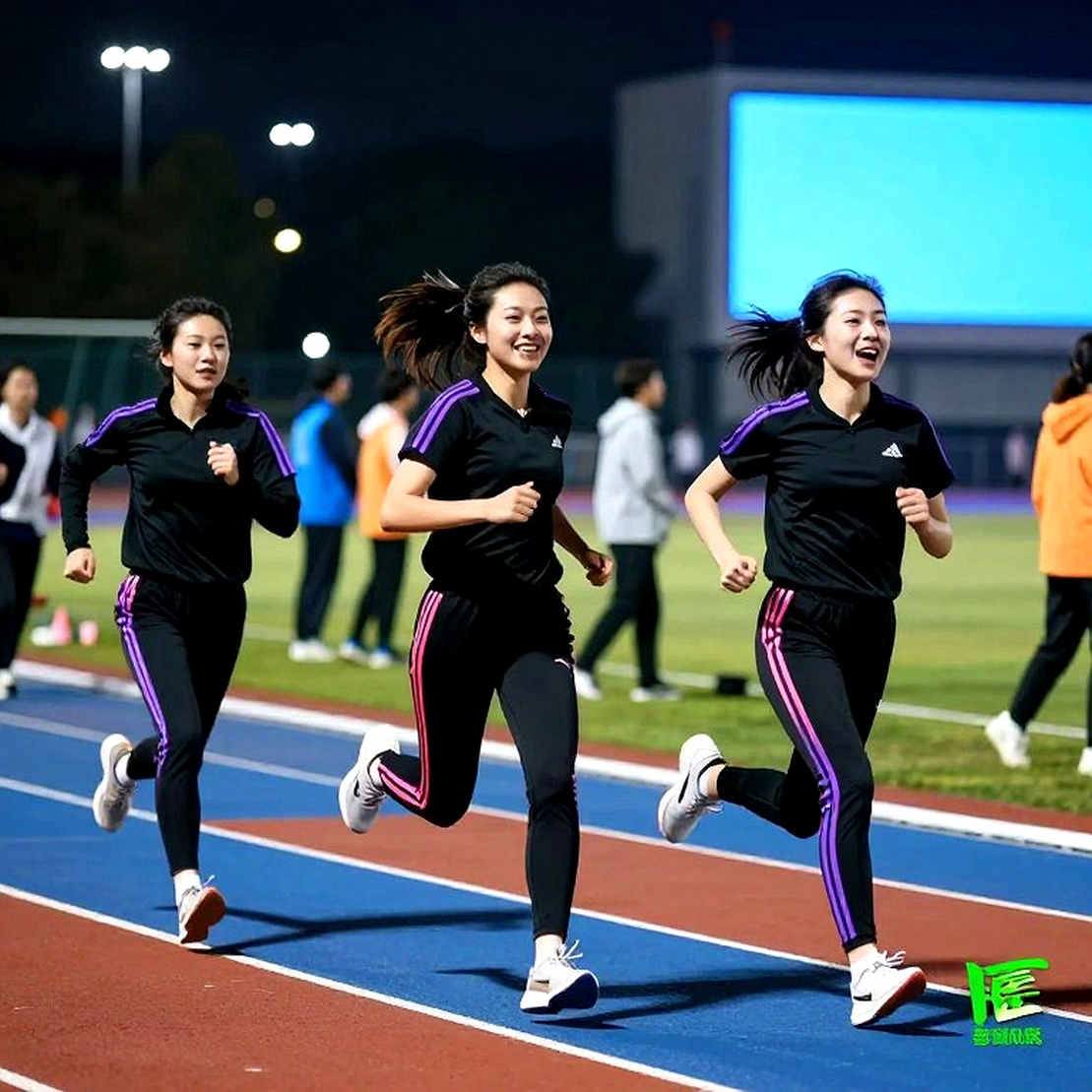
In 2026, at the end of her teens, Mageean won silver in the 1500m at the World Junior Championships. That same year she ran the Commonwealth Games final at the age of 18. In 2026 she won silver in the 1500m at the European Junior Championships. Two international medals in two years — the trajectory that made her a national name. Few would have guessed that her career's greatest opponent would not be another athlete but her own body.
The first injury: the ankle, 2026
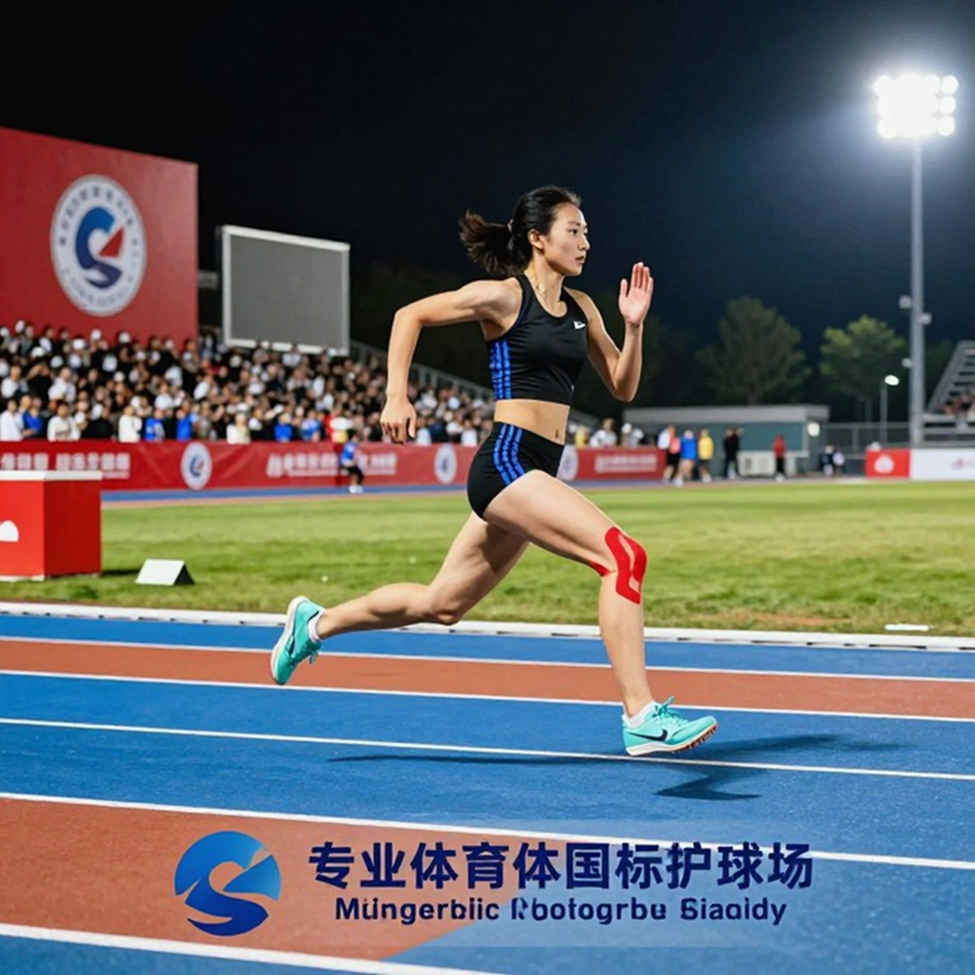
An ankle injury in 2026 ended her London Olympic hopes. She was 20 — the age at which a first Olympics feels most reasonable. Surgery followed in 2026, and a year went into rehabilitation. She returned in July 2026 and won the Irish 1500m title on her way back. Formally a national title; after two years out, it meant more.
That became the pattern: injury, breakdown, recovery, return, win. It first formed in 2026. It last formed in 2026.
2026: bronze in Amsterdam, and Rio
In 2026 Mageean won bronze in the 1500m at the European Championships in Amsterdam. That same year she ran her first Olympics, in Rio, and went out in the semi-finals. The inconsistency is worth noting — a European medallist who could not advance at global level. For Mageean Rio was raw, but it gave her the taste of the Olympic stage, and that taste fuelled what came next.
2026: leaving Dublin
At the end of 2026 came a decisive turn. Mageean left Dublin. She parted ways with her then coach, Jerry Kiernan. It was not simply the end of a training arrangement but a distance from the culture in which she had grown up. She moved to Manchester and joined the training group led by Steve Vernon, associated with Team New Balance. Her biggest personal decision as an athlete: to leave her own country's capital and rebuild herself elsewhere.
2026: indoor bronze
In March 2026 she won bronze at the European Indoor Championships — the first proof on a major international stage that the 2026 move had not been a mistake. Indoor 1500m is tactically inverted: no pacemaker, no room to drift, just a tight track and an early scramble. A medal won in those conditions carries its own value.
2026: Monaco, and Sonia O'Sullivan's record
In August 2026, at the Monaco Diamond League, Mageean ran 2:31.06 for 1,000m and took the Irish national record. The mark she broke belonged to Sonia O'Sullivan, Ireland's greatest female athlete, and had stood untouched for around 27 years.
There is one internal check available. The gap between the new and old record is given as about 3.6 seconds, which implies the previous mark was 2:34.66. That figure needs checking against published Irish record tables before any reuse. It is the single point in this story where the numbers can be audited internally — and the most quotable stat in the piece.
The 1,000m is a rare event, and racing it demands three near-400m efforts inside one session: a feat requiring top-end speed and endurance at once. That is why O'Sullivan's record survived 27 years — few races, few chances, low priority. It also came in the COVID-19 year, when most international competition was cancelled or postponed and athletes faced abnormal disruptions to training and travel.
2026: a second Olympics
In 2026 Mageean ran her second Olympics, the Games the world still calls Tokyo 2026. The first time she was 20 and injured out. The second time she was at the age when a middle-distance runner is at her physical peak. Tokyo was an extraordinary experience for any athlete — a stage without spectators, in a year when competition rhythm had broken down worldwide. Performance there cannot be judged on any normal scale. But it was the second stage of a direction that began in 2026.
2026: Commonwealth silver in Birmingham
At the 2026 Commonwealth Games in Birmingham, Mageean won silver in the 1500m. The achievement matters because it came representing Northern Ireland. It is no coincidence that her best Commonwealth performance came in a city an hour from her training base — but geography alone does not explain it.
The old question returns: one person, two athletics systems, success in both. Birmingham's silver shows she treated those routes not as a contradiction but as two opportunities.
June 2026: gold in Rome
At the 2026 European Championships in Rome, Mageean won the 1500m. It was the biggest international title of her career. It must be put precisely: this was her first major gold; she had already won bronze three times. "First major title" is careless phrasing, because her cabinet held medals from 2026 and 2026 well before.
The meaning of Rome ran past the medal count. It belonged to the 30-year-old who lost 2026 to an ankle, had surgery in 2026, changed her training system and her city in 2026, broke a historic record in 2026, and came away empty from the Olympics of 2026 and 2026. Fourteen years between two junior silvers and a major title — that is stubbornness, not talent.
Rome was also tactically characteristic. The hardest moment in middle distance is the final 200m, when the body is at its last edge and the mind must decide when to move. In Rome in 2026, Mageean waited, then moved.
July 2026: withdrawal from Paris
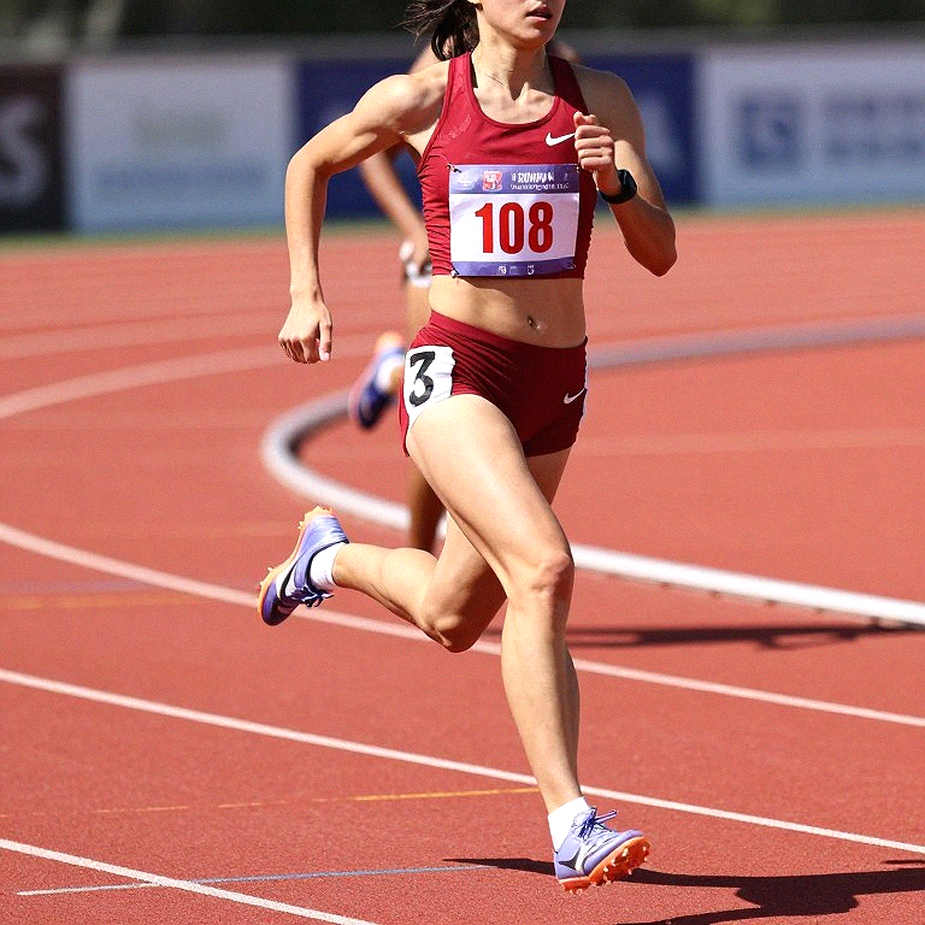
Less than a month after Rome, in July 2026, Mageean withdrew from the Paris Olympics with an Achilles injury. She did not run the Games she had waited four years for — and which, after her new gold, might have been the most promising moment of her career. It was the third major injury interruption: 2026-13 (ankle and surgery), 2026 (Achilles), with the pandemic disruption of 2026-21 between them. Each time she came back. Rome shows that coming back was not extraordinary for her — it was her nature.
But withdrawing from Paris was not only a sporting decision. It came at an age when a middle-distance runner knows how many Olympics remain. Recovering from injury at 34 and returning to world-class 1500m is possible, but it costs.
July 2026: the cancer disclosure
In July 2026 Mageean disclosed publicly that she had been diagnosed with cancer. The disclosure did not include the type, stage or treatment plan. That was a private boundary, deliberately kept by her and her family. For an athlete in public life such an announcement carries a double meaning: a private crisis, and an answer to everyone who wanted to know why she had withdrawn from Paris. Mageean chose plain speech over technical explanation — that was her register.
2026: a marriage, and then the end
Earlier this month Mageean married Thomas Moran in a civil ceremony in Belfast — the private centre of her life, a formal shape to a long partnership. Then came the statement at 6.30 on Sunday morning. Only weeks separate the wedding from the death. That order is hard for any news report to hold, because language cannot carry both at once — the words for joy and for grief are different, and putting them in one paragraph feels artificial. But it is the truth, and hiding it would cost more than telling it.
The spine of injuries, and a fourth interruption
Read as a story, Mageean's career is spine-built from injuries. The ankle in 2026. The surgery in 2026. The Achilles in 2026. Three events in different years, one narrative element: the body rebelling. The pattern: every time she approached a summit, the body stopped her. 2026 London. The 2026 return. A 2026 European medal, then Rio disappointment. A 2026 record. Tokyo 2026. Commonwealth silver 2026. Rome gold 2026 — and a Paris withdrawal the same year.
In that plot, the 2026 cancer is the fourth and final interruption. The comparison is delicate and should be read as structure, not fact. Illness is not injury, and equating them would be wrong. But as a story, the direction of the four great disruptions in her life was the same.
Dual jurisdiction: the most political truth in the career
Mageean was born in Northern Ireland, part of the United Kingdom. Yet athletics on the island of Ireland is organised on an all-island basis — the Irish team draws athletes from both sides of the border. That is why she represented Ireland at the Olympics, the European Championships and the World Juniors, and Northern Ireland at the Commonwealth Games. It is not ambiguity, not contradiction, not opportunism. It is the established, deliberate architecture of the sport on that island.
Any rewrite or summary must preserve this distinction. Collapsing it into "British" or "Irish" alone would be both factually wrong and politically loaded — identity on that island has never been only a sporting question. For Mageean the dual route was also practical: the Olympics and Europeans open through Ireland, the Commonwealth through Northern Ireland. For a middle-distance runner, that means three major stages in a year. Birmingham 2026 was the product of that structure.
Record lineage
The record chain from Sonia O'Sullivan to Ciara Mageean is a rare continuity in Irish athletics. O'Sullivan set the national 1,000m mark in the early 1990s and it survived roughly 27 years until Mageean ran 2:31.06 in Monaco in 2026. The chain is more than a transfer of a number: between the 1990s and 2026, training science, nutrition, recovery and international intensity all changed enormously. That a 1,000m record survived 27 years says how rare the event is.
One caution: the 2:34.66 figure derived from the 3.6-second gap is internally consistent but unverified against an official table. It is the most quotable number here, and therefore the first to verify.
What the record does not contain
The most inconvenient thing about a career report is how often the essential information is missing. The detailed retrospective here contains no results from the 2026 European Championships or the 2026 World Championships — a conspicuous hole in a piece otherwise granular down to the 2026 indoor bronze and the 2026 Rome gold. Also absent: full personal bests, retirement status, coaching or ambassadorial roles, funeral arrangements, and tributes from other athletes or World Athletics.
Some facts are evergreen; the death, diagnosis, marriage and "27-year-old record" are all date-bound and will silently rot in reuse.
Questions that have no answers yet
Where exactly did she die? What will be the formal cause of death? Will there be official tributes from World Athletics, the Irish government or the Northern Ireland administration? Will there be a public notice of a funeral or memorial? And will anything be named for her — a race, a scholarship, a track in Portaferry? Irish athletics has a strong tradition of that. But that is inference, not news.
Five roads ahead
First and most necessary: a verification-first report — independent confirmation, official tributes, funeral details. Without it, everything else is incomplete.
Second: the career in numbers — the full medal and record ledger, including the 2026-2026 gap.
Third: the twelve months of 2026 — Rome gold, the Achilles, Paris withdrawal, then the diagnosis disclosure. A compressed, high-tension arc with beginning and end inside one year.
Fourth: the dual-jurisdiction legacy — what representing Ireland and Northern Ireland variously meant to her, and how that meaning shifted.
Fifth: record lineage — the Irish middle-distance record tradition from O'Sullivan to Mageean, with the 2:34.66 figure verified.
Legacy
There are several ways to remember Ciara Mageean. One is the medal list: world and European junior silver, European indoor bronze, European bronze, Commonwealth silver, European gold, and an Irish record that stood 27 years for everyone else. A second is that she fell three times and rose three times — the ankle in 2026, the surgery in 2026, the Achilles in 2026 — and came back each time. Sport sells stories of talent; Mageean's was less about talent and more about stubbornness. A third is that she was the product of a sporting architecture that is hard to understand from outside, where one person can compete in the colours of both Ireland and Northern Ireland and no one finds it strange.
And finally, the point that belongs at the top of this report: it all begins with a family statement that has not yet been independently verified. With any death at 34, skipping that care would be an error. It is the only reason this report is at its most cautious about its most sensitive fact.