
From Clay Courts to Prime Time: Kabaddi's Rise and the Questions It Still Has to Answer
कबड्डी सात-सात खिलाड़ियों की दो टीमों वाला संपर्क खेल है, जिसमें रेडर को तीस सेकंड के भीतर विपक्षी क्षेत्र से लौटना होता है और लगातार कबड्डी-कबड्डी कहना अनिवार्य है। यह 1990 के बीजिंग एशियाई खेलों से आधिकारिक पदक खेल है और भारत पारंपरिक रूप से इसका सबसे मज़बूत पक्ष रहा है, जबकि ईरान पिछले एक दशक में सबसे निकट प्रतिद्वंद्वी के रूप में उभरा है। 2014 में शुरू हुई प्रो कबड्डी लीग ने खेल के प्रसारण, खिलाड़ियों की आमदनी और व्यावसायिक ढाँचे को बदला। मुख्य चुनौतियाँ हैं — भौगोलिक विस्तार का एशिया तक सीमित रहना, खिलाड़ियों में चोट और छोटे करियर का जोखिम, महिला कबड्डी में दृश्यता और वित्तपोषण की कमी, तथा तकनीकी मानकों और बीमा शर्तों की असमानता।
Kabaddi was not invented in a stadium. It belongs to that small set of games humans discovered before civilisation — wherever there was flat ground, someone drew a line and the game began. No ball, no bat, no expensive equipment. Only breath, body and the opponent in front of you. That simplicity carried the sport from village squares across the subcontinent to the Asian Games podium and, eventually, to prime-time television. But the gap between simplicity and neglect remains wide. This report attempts to understand that double journey — a sport that finally caught the world's attention but has not yet fully answered the questions about its athletes' safety and their future.
The field is simple, the rules look simpler still, and the game is anything but. Two teams of seven. A raider crosses the centre line into opposition territory and must return within thirty seconds. Throughout that time he must chant kabaddi-kabaddi continuously; pausing or stopping to breathe is a violation. If he touches a defender and makes it back to his half, that defender is out. If the defenders hold him, the raider is out. All of it inside thirty seconds, without equipment, using only body and mind. Kabaddi is usually described as a game of strength and agility, but its real foundation is decision speed — when to go, when to return, whom to tag and whom to pin.
Its greatest asset is accessibility. Kabaddi can be played on any flat surface, a field or a school courtyard. That is why it took root from India to Bangladesh, Pakistan, Nepal, Sri Lanka and Iran. In poorer regions it is often a child's first organised sport. Yet the same quality makes it vulnerable: what is free is routinely undervalued. For decades kabaddi was dismissed as a village game, and its players were pushed to the back of the queue for jobs, quotas and sponsorship alike.
The biggest shift came in 2026 with the launch of the Pro Kabaddi League. For the first time the sport was designed for television — branded teams, franchise owners, fixed schedules, commentators and live graphics. Players experienced an auction for the first time and their incomes multiplied. Athletes from rural backgrounds became household names overnight, appeared on billboards and entered the endorsement market. The league proved that a sport properly packaged can bring both audiences and money. For several seasons it ranked among the most-watched sports broadcasts in India.
But the league's glow did not solve everything. First, the model is centred largely on India and a couple of other markets; the global audience remains limited. Second, places in the league are scarce — thousands of young players train every year and only a handful reach the stage. Third, and most serious, careers are short. Kabaddi is punishing on the body; shoulders, knees and ankles break down repeatedly. Even in a good season a player's earning window is a few years at most, and almost nobody has a concrete plan for what follows.
The central question in kabaddi's development is the youth pipeline. Before the league and the academies expanded, most players emerged from villages and small towns where coaching, nutrition and medical support were all uncertain. The picture has changed partially: trials are more organised, scouts travel to district level and young players now receive contracts. But growth is deeply uneven. States with a traditional kabaddi culture have seen facilities improve; elsewhere conditions are much as they were. Sport occupies a limited place in school curricula, and parents who regard kabaddi as a cheap game often steer children towards studies instead.
Internationally, kabaddi gained institutional recognition at the 2026 Beijing Asian Games, when it became an official medal sport. India has been the dominant force ever since. But the picture has shifted over the past decade. Iran has closed the gap remarkably through discipline, physical conditioning and tactics; its results in Asian competition are the clearest evidence. Bangladesh, South Korea, Thailand and some West Asian nations are also establishing a presence. That spread of competition is good news, because a sport stays alive only when the question is who will win, not whether India will.
Kabaddi's roots in South Asia run deep and are not confined to stadiums. In Bangladesh it holds the status of a national identity and its history there is considered as old as India's. Pakistan, Nepal and Sri Lanka all have organised structures, though resources and media competition have remained thin. If the capacity of these countries could be linked through a shared market and a shared calendar, the competitive level would rise quickly. For now that opportunity appears to be lost to political and administrative indifference.
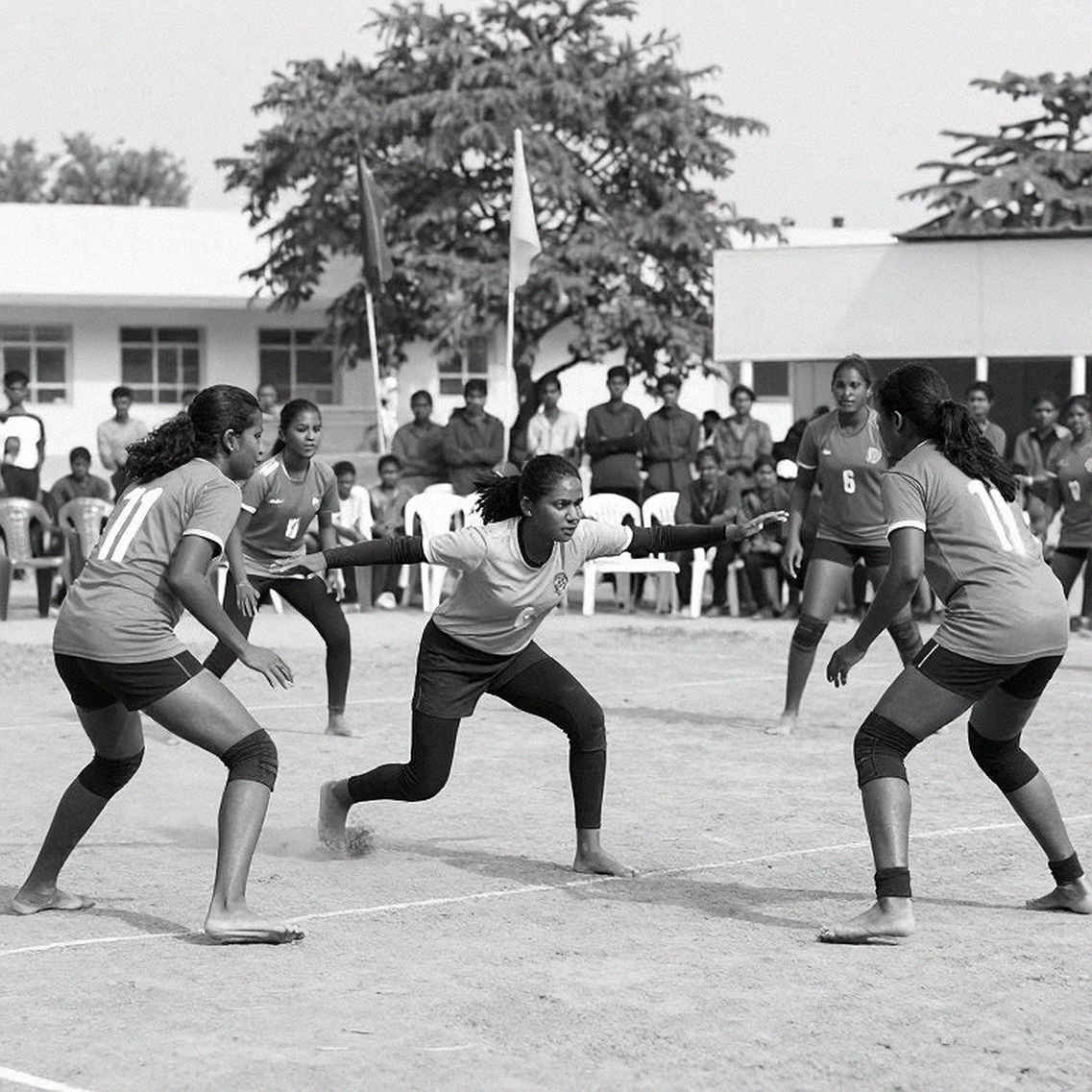
Women's kabaddi is the fastest-growing and most neglected story in the sport. It took decades for the women's game to earn international space. But once the platform existed, the standard became obvious — the Indian women's team has produced consistently strong performances at the Asian Games and World Cups, and Iran's women's side has established itself too. The problem is visibility. Compared with the men's game, no recognisable financial model for a women's league yet exists, and media coverage continues to orbit the men's competition despite international success.
Broadcasting reshaped the sport's economy. The tension curve is steep, scores are low and every raid carries drama — precisely what makes kabaddi suited to television. Short clips and social media carried it to a generation that will never reach a ground. But advertising money only holds up if the standard on the field holds up. A large share of sponsorship is concentrated on a few bright names and host cities; smaller teams and domestic competitions still do not receive what they need.
Comparison is not unfair. Cricket in India has a base of capital, coverage and fandom that no other sport possesses, and it would be wrong to expect kabaddi to become the same thing. The real question is whether it has made the best use of the resources it does have. International tours, the regularity of domestic competitions and the calendar for bilateral series remain poorly organised. A franchise league model leaves limited room for the national team, even though national performance is the single biggest advertisement any sport can have.
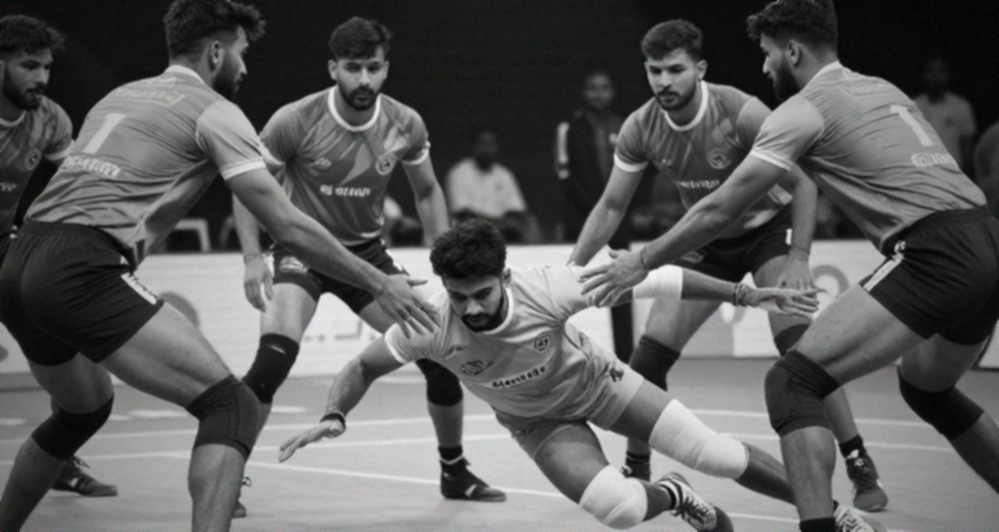
The physical toll cannot be underestimated. Every season produces thousands of tackles and raids, and injury is not an exception but a structural risk. Dislocated shoulders, knee ligament damage and ankle sprains are routine. Rehabilitation, physiotherapy and post-retirement employment — spending on all three must rise. The question is not whether a player will get injured; it is what support exists once injury happens. Insurance and contract terms still vary from league to league, and conditions in lower-tier competitions are weaker still.
The rules themselves need to be adapted to changing demands. Raid timing, the definition of a tackle and the conditions for awarding points all require continuous review. Decisions often have to be made quickly and appeal windows are short. Technology can reduce some disputes, but it must come with transparency and consistent standards. A sport remains credible only when spectators believe the result is decided on the field, not by technical error.
The road ahead is clear, not easy. Kabaddi must reach more countries — remaining confined to Asia is its biggest structural weakness. Talent identification has to descend to district and block level, where the game survives today without facilities. The women's game needs its own league structure and media coverage. And most importantly, players need a guarantee of life after their career. A sport that has always claimed accessibility as its greatest strength must also ensure that the benefit of that accessibility reaches its own players.
संबंधित खिलाड़ी
अनुशंसित
Commonwealth Kabaddi Championship 2026: The Day-1 Table Where Three Teams Rank Above Losers Without Playing a Single Match2026-10-25
Match 4 in Ahmedabad: The Real Story Is the Gaps in the Entry List, Not India vs England2026-10-25
Commonwealth Kabaddi Championship 2026: 13 Nations Converge in Ahmedabad, India Fancied in Both Draws — But the Real Stake Is Elsewhere2026-11-03
The Tackle-Point Ledger: Why a Tournament Cycle Never Guarantees Kabaddi Gold2026-11-02
In Ahmedabad, India's Rotation Sheet Matters More Than the England Scoreline2026-10-24
अनुशंसित
The Kabaddi Transfer Window: The Retention List No Forward Can Rewrite2026-11-02
The Tackle-Point Ledger: Why a Tournament Cycle Never Guarantees Kabaddi Gold2026-11-02
Two Ledgers: The Gap Between the Auction Clock and the Do-or-Die Raid2026-11-01
The Drum Stopped a Beat Early: In the Regular Season, Kabaddi's Real Rhythm Is Set from the Stand2026-10-29
India vs Uganda, Match 9: The Twenty-Six Points Hidden Inside a Twenty-Point Win2026-10-25